
Plants
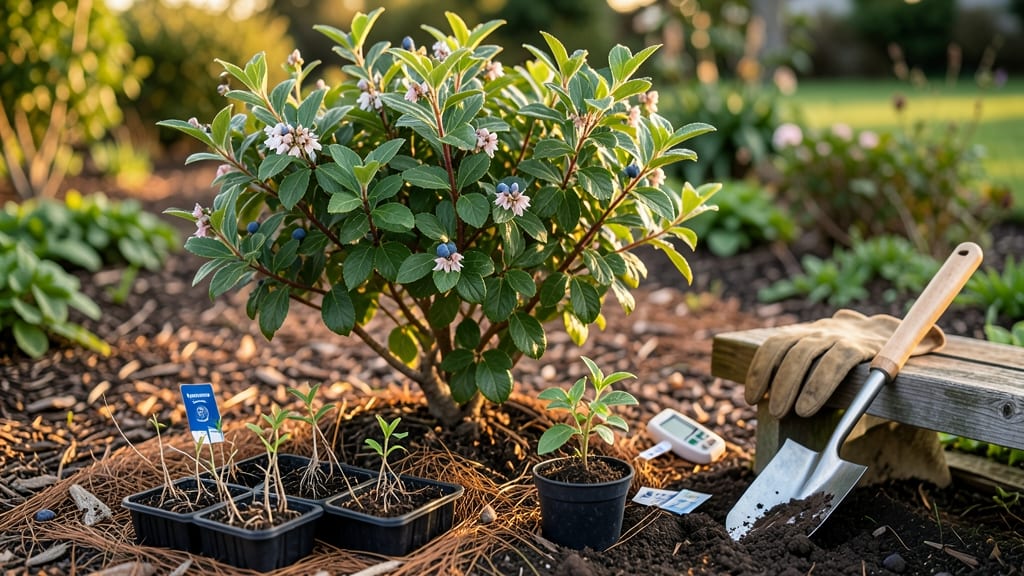
Planting blueberries in Washington State at the wrong time can mean years of struggling with weak bushes and poor fruit—unless you match your variety to your region's chill hours.
The 6b-8b zones across WA create dramatic differences in timing, from Eastern WA's early spring readiness to Western WA's later start. Whether you're in the Puget Sound or the dry interior, getting this right ensures your 🫐 bushes thrive and produce berries for decades.
Most gardeners in WA make one critical mistake: planting too early or too late without checking their local frost dates. Eastern WA's last frost typically arrives by March 15, while Western WA waits until April 15—a difference that can determine whether your blueberries survive their first winter.
The solution? Plant bare-root bushes in late winter (February-April) or established container plants in fall (September-October) when soil temps stay above 40°F.
What you're about to discover is how to pick the perfect planting window for your specific WA location. We'll cover the exact chill-hour requirements for popular varieties like 'Duke' (low-chill) and 'Bluecrop' (mid-chill), plus how to adjust your schedule if you're in a frost-prone valley or coastal microclimate.
With these insights, you'll avoid the most common pitfalls and set your blueberry bushes up for a bountiful harvest every May-July.
Ready to transform your backyard into a blueberry powerhouse? Let's break down the science behind WA's planting zones, the best varieties for your specific chill hours, and the pro tips that separate successful gardeners from those who give up after their first failed attempt.
Your future juicy, homegrown berries start with getting this timing right.
Best planting months for Washington blueberries by chill-hour zones
Washington State’s diverse climate—from the Puget Sound’s marine influence to the dry inland valleys—creates distinct chill-hour zones that dictate the perfect time to plant blueberries. Chill hours (below 45°F) trigger dormancy and fruiting, so matching your variety to your region ensures success.
For example, Western WA’s mild winters (USDA Zones 7b-8b) favor low-chill varieties, while Eastern WA’s colder winters (Zones 6a-7a) thrive with high-chill types.
Your planting window hinges on two critical factors: soil temperature (ideal: 40-50°F) and frost risk. In Western WA, aim for September-October (fall) or February-March (spring) when soils warm enough to avoid root shock.
In Eastern WA, plant late April-early May to escape late frosts (average last frost: March 15 in Spokane vs. April 15 in Seattle).
🌡️ Washington Blueberry Planting Zones: Chill Hours & Timing
| Zone/Region | Chill Hours | Best Planting Months | Soil Temp Trigger | Frost Risk |
|---|---|---|---|---|
| Western WA (Puget Sound) | 500–800 hrs | Sep–Oct (fall) or Feb–Mar (spring) | 40–50°F | Low (last frost: April 15) |
| Western WA (Coastal) | 300–500 hrs | Oct–Nov (fall) or Mar–Apr (spring) | 45–55°F | Very Low |
| Eastern WA (Palouse) | 800–1,200 hrs | Apr–May (spring only) | 45–50°F | High (last frost: March 15) |
| Eastern WA (Columbia Basin) | 600–900 hrs | Apr–May (spring) or Sep (fall) | 50–55°F | Moderate |
Pro Tip: Use WSU Extension’s chill-hour calculator to verify your exact zone.
For bare-root blueberries, plant as soon as roots arrive (spring) or store in moist peat moss until fall. Container-grown bushes offer more flexibility—plant anytime soils aren’t frozen, but avoid summer heat stress.
In high-rainfall areas (e.g., Olympic Peninsula), prioritize well-draining soil to prevent root rot during WA’s 120+ inches of annual rain.
Timing also depends on your blueberry’s maturity timeline. Early varieties (e.g., 'Duke') need fewer chill hours and can fruit in 60–90 days, while late varieties (e.g., 'Jersey') require 120+ days.
Plant early varieties in coastal zones and late varieties in inland areas to align harvests with WA’s May–July growing season.
Watch for false springs—a warm spell followed by frost—that can confuse dormancy cycles.
In Eastern WA’s dry valleys, mulch with pine needles (to acidify soil) and straw (to retain moisture) to protect roots during temperature swings. Western WA’s windy coastal areas benefit from windbreaks (e.g., evergreen hedges) to reduce transplant shock.
Avoid planting in waterlogged soils, common in WA’s clay-heavy regions. Amend with sand or compost to improve drainage, and test soil pH (ideal: 4.5–5.5) using a home test kit or send a sample to WSU Soil Lab. Acidic soil is non-negotiable—blueberries won’t thrive in alkaline conditions.
If you’re in Zone 8b (Western WA), extend your harvest window by planting two varieties with staggered maturity times (e.g., 'Bluecrop' + 'Duke'). This ensures fruit from June through August, just in time for local farmers' markets.
In Zone 6a (Eastern WA)high-chill varieties like 'Patriot' to guarantee fruit set despite colder winters.
Remember: Fall planting gives roots time to establish before winter, while spring planting avoids dormancy disruption. For container growers, plant in early spring to maximize the growing season. Always water deeply after planting to eliminate air pockets in the soil.
🫐How to choose blueberry varieties that thrive in Washington’s climate
Selecting the right blueberry variety for your Washington location is the first step to a thriving harvest. The chill hours your region receives—typically 200-1,000 hours below 45°F—determine which varieties will fruit well.
In WA, this means choosing between low-chill (200-400 hrs), mid-chill (400-600 hrs), and high-chill (600-1,000 hrs) types to match your specific microclimate.
For example, Western WA's milder winters (USDA zones 7b-8b) often struggle with high-chill varieties like 'Jersey,' while Eastern WA's colder winters (zones 6b-7a) thrive with them. The key is to check your local chill-hour data—tools like the WA State University Extension's climate maps can help pinpoint your exact range.
Here’s the breakdown of top-performing varieties for WA, including their chill-hour needs and ideal planting zones:
| Variety | Chill Hours | Best WA Zones | Maturity Time | Notes |
|---|---|---|---|---|
| Duke | 200-300 hrs | Western WA (7b-8b) | 60-70 days | Early ripening, self-pollinating |
| Bluecrop | 400-500 hrs | Mid-WA (6b-7a) | 80-90 days | Classic, high yield, needs pollinator |
| Jersey | 600-800 hrs | Eastern WA (6b) | 90-100 days | Large berries, late season |
| Brigitta | 300-400 hrs | Puget Sound | 70-80 days | Compact, disease-resistant |
| Patriot | 500-600 hrs | Cascade foothills | 80-90 days | Self-pollinating, cold-hardy |
Beyond chill hours, pay attention to pollination needs. Most blueberries require a second variety for cross-pollination, except self-fertile types like 'Duke' or 'Patriot.' Plant two compatible varieties 10-15 feet apart to ensure fruit set.
For example, pair 'Bluecrop' with 'Jersey' in Eastern WA or 'Duke' with 'Brigitta' in Western WA.
Another critical factor is soil pH. Blueberries demand acidic soil (pH 4.5-5.5). Test your soil using a home pH kit or send a sample to WSU Extension.
If your soil is too alkaline, amend it with elemental sulfur or peat moss before planting. This step alone can make the difference between thriving bushes and stunted growth.
Finally, consider your harvest goals. Early varieties like 'Duke' ripen in May-June, while late varieties like 'Jersey' extend your harvest into July. Planting a mix of early, mid-, and late-season varieties ensures a continuous supply of berries throughout Washington’s growing season.