
Trees
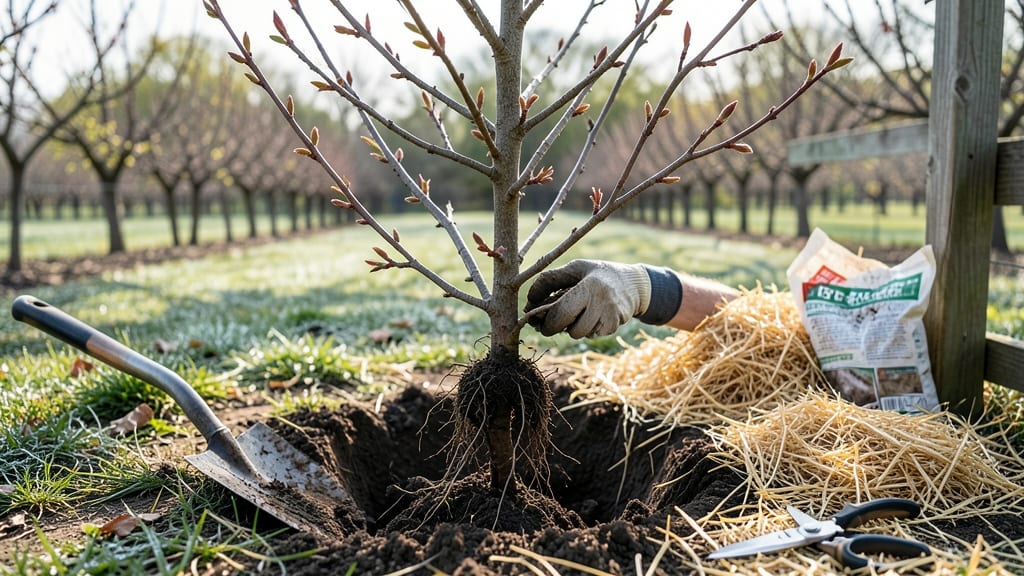
Timing your fruit trees planting in Iowa isn't just about grabbing a shovel—it's the difference between a thriving orchard and a sad, frozen sapling. With Iowa's 4a-5b zones and unpredictable frost patterns, getting it wrong can leave your 🍎 trees struggling to survive winter or bloom properly.
Most gardeners assume spring is the only option, but fall planting actually gives fruit trees a head start on root growth before winter. The key is understanding your specific zone's last frost date—typically around April 15—and how chill hours affect different varieties.
Get this wrong, and you might end up with trees that either flower too early or never produce fruit at all.
I'll show you exactly when to plant in Iowa's two best windows—early spring or fall—and which fruit tree varieties thrive in each zone. Whether you're planting bare-root saplings or container-grown trees, these timing tips will help you avoid common mistakes that waste time and money.
Ready to grow fruit trees that survive Iowa's winters and reward you with bountiful harvests? Let's break down the science of frost dates, chill hours, and the perfect planting schedule for your orchard.
Iowa’s frost dates and planting windows by hardiness Zone
Iowa’s USDA hardiness zones 4a-5b create unique challenges for fruit tree planting. The last spring frost typically arrives between April 15 and May 1, while the first fall frost hits around October 15.
These dates vary by microclimates, with urban areas often 2-3 weeks later than rural zones due to heat islands.
For bare-root trees, the ideal planting window is early spring (March-April) when soil thaws but before buds swell. Fall planting (September-October) works for container-grown trees, giving roots time to establish before winter. Avoid summer planting—heat stress and limited root growth reduce survival rates.
Northern Iowa (zones 4a-4b) has shorter growing seasons (120-140 frost-free days), while southern Iowa (zone 5b) enjoys 160-180 days. This affects which fruit varieties thrive. For example, apple trees need 600-800 chill hours, while peaches require 500-700 hours—both critical for winter survival.
Urban gardeners face extra challenges: concrete heat can delay frost dates by 1-2 weeks, while wind exposure in open fields increases late-frost damage. Always check local frost records (via Iowa State University Extension) for your specific area.
Iowa Planting Windows by Zone
| Zone | Last Frost | First Frost | Spring Planting Window | Fall Planting Window |
|---|---|---|---|---|
| 4a (NW IA) | May 1-15 | Sept 30-Oct 10 | April 15-May 1 | Sept 1-15 |
| 4b (Central IA) | April 20-May 5 | Oct 5-15 | April 1-May 10 | Sept 15-Oct 1 |
| 5a (SE IA) | April 10-25 | Oct 10-20 | March 25-April 15 | Sept 20-Oct 10 |
| 5b (Southeast IA) | April 1-15 | Oct 20-Nov 1 | March 15-April 30 | Sept 25-Oct 20 |
*Adjust for urban areas (+2 weeks) or windy fields (-1 week).
Spring planting gives trees 6-8 weeks to establish roots before summer heat. Aim to plant 2-3 weeks after last frost—this prevents root shock from sudden warmth. For fall planting, choose 6-8 weeks before first frost so roots harden before winter.
In zone 4a, prioritize early-maturing varieties like Honeycrisp apples or Montmorency cherries, which tolerate shorter growing seasons. Zone 5b gardeners can experiment with later-blooming peaches or plums, which handle warmer winters better.
Use windbreaks (e.g., evergreen hedges) to protect young trees from Iowa’s harsh winds, which can desiccate bark. In urban areas, test soil pH (aim for 6.0-7.0clay-heavy soil often needs organic matter for drainage.
Always monitor local weather forecasts in late April/May for late frost warnings. Cover young trees with frost cloth if nights dip below 28°F—this can save new growth and flower buds.
For container-grown trees, fall planting is ideal: roots establish before winter, and transplant shock is less severe. Water deeply 1-2 times weekly until first frost, then reduce to monthly in winter.
Chill-hour requirements for popular fruit trees in Iowa
Not all fruit trees thrive in Iowa’s climate, and the key to success lies in chill hours—the number of hours below 45°F a tree needs to set fruit properly. Iowa’s 4a-5b zones demand varieties that tolerate 500-1,000 chill hours, but some trees need far more.
For example, peaches and plums often require 500-800 chill hours, while apples and cherries can handle up to 1,000+.
Choosing the wrong variety can mean blooms that never turn into fruit. In Zone 4a (northern Iowa), opt for Honeycrisp apples or Montmorency cherries, which handle 800-1,000 chill hours. Meanwhile, Zone 5b (southern Iowa) can support Elberta peaches or Stanley plums, needing just 500-700 chill hours.
Here’s how to match your fruit tree to Iowa’s chill-hour needs and zone-specific performance:
| Tree Type | Chill-Hour Needs | Best Iowa Zones | Top Varieties | Cold Hardiness |
|---|---|---|---|---|
| Apple | 800-1,000+ | 4a-5b | Honeycrisp, Fuji, Jonathan | -30°F to -20°F |
| Peach | 500-800 | 5a-5b | Elberta, Redhaven, Reliance | -25°F to -15°F |
| Cherry | 600-1,000 | 4a-5a | Montmorency, Stella, Meteor | -30°F to -20°F |
| Plum | 400-700 | 4b-5b | Stanley, Methley, Patio | -25°F to -10°F |
If you’re in Zone 4a, avoid low-chill varieties like tropical peaches, which need 200-400 chill hours. Instead, focus on apples and cherries, which handle Iowa’s long winters. In Zone 5b, you have more flexibility—peaches and plums thrive here with minimal risk of frost damage.
Pro tip: Check the chill-hour map for your specific Iowa county, as microclimates can shift needs by 100-200 hours. For example, Des Moines (Zone 5b) may support Redhaven peaches, while Dubuque (Zone 4a) should stick to Honeycrisp apples.
Once you’ve picked the right variety, timing your plant becomes just as critical. Fall-planted trees in September-October establish roots before winter, while spring plantings in March-April avoid late frosts. Either way, prioritize chill-hour compatibility to ensure your trees fruit every year.