
Trees
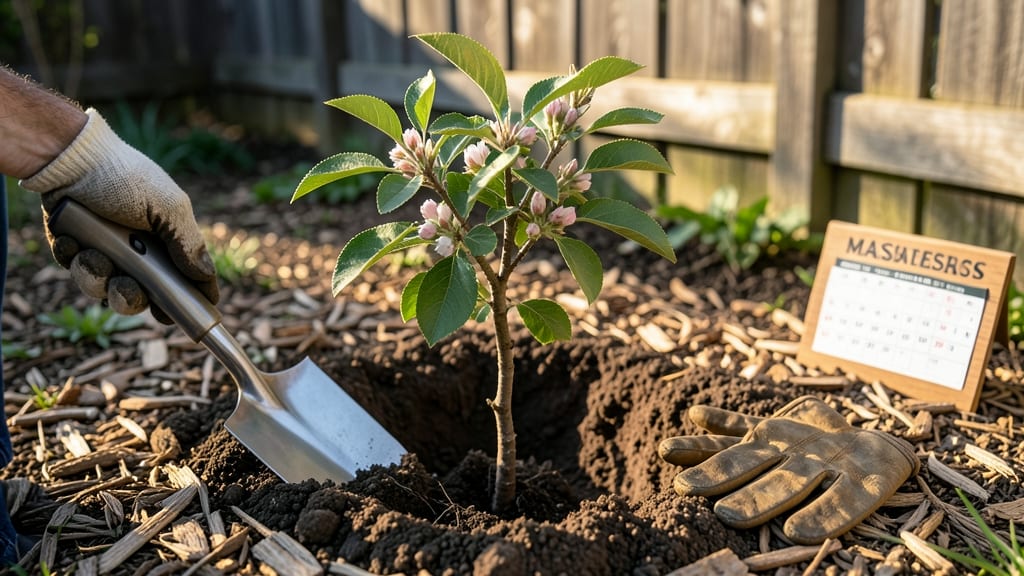
Timing your Apple Tree 🍎 planting in Massachusetts can mean the difference between a thriving orchard and a struggling sapling that never recovers from winter.
With USDA zones 5b-6b bringing unpredictable frost patterns, knowing exactly when to plant gives your tree the best shot at strong root growth before dormancy sets in.
Most gardeners in Massachusetts rush to plant as soon as the ground thaws, but that’s not always the best strategy. Late winter through early spring—particularly March and April—offers the perfect balance of thawed soil and cooler temperatures that reduce transplant shock.
Container-grown trees have a slightly longer window, but bare-root varieties demand precision timing to avoid early frost damage.
Why does this matter so much? Because planting too early exposes young roots to lingering cold, while waiting too long risks stunted growth before winter dormancy kicks in.
I’ll walk you through the zone-specific timing that works for Massachusetts’ climate, plus soil prep tips to set your Apple Tree 🍎 up for long-term success.
Whether you’re a first-time gardener or a seasoned orchardist, getting this right now means fewer headaches—and more apples—down the road. Let’s dive into the exact planting windows and what to watch for in your region.
Best planting months for Massachusetts apple trees by hardiness zone
Massachusetts spans USDA zones 5b-6b, which means our apple trees face short growing seasons and harsh winters. Planting at the wrong time can leave young roots vulnerable to freeze-thaw cycles or summer drought.
The key is timing root growth to align with soil thaw and spring moisture—before buds break or winter returns.
For bare-root apple trees, the ideal window is late winter to early spring (February through April). This gives roots 6-8 weeks to establish before summer heat arrives. If you opt for container-grown trees, you can also plant in early fall (September-October), but only if the ground stays unfrozen.
In Zone 5b (western MA, like Berkshires), aim for March-April planting to avoid late spring frosts that can damage new growth. Zone 6a-6b (eastern MA, like Boston) offers a slightly longer window—February-April—but don’t delay past mid-April to prevent summer stress.
| Zone | Best Planting Window | Key Consideration | Risk of Late Planting |
|---|---|---|---|
| 5b (Berkshires, Worcester) | March–April | Soil thaw + bud break timing | Frost damage to new growth |
| 6a (Pittsfield, Springfield) | Late Feb–April | Longer frost-free window | Summer drought stress |
| 6b (Boston, Cape Cod) | Feb–mid-April | Warmer microclimates | Heatwave shock |
| Fall Option (All Zones) | September–early Oct | Container-grown only | Winter desiccation |
If you’re planting in fall, stick to container-grown trees and finish by early October. The roots need 6-8 weeks to harden before winter. Avoid bare-root trees in fall—they’re too vulnerable to freeze-thaw cycles and soil heaving.
Pro tip: Check local frost dates (like Massachusetts Horticultural Society’s frost calendar) to time planting. For example, Boston’s last frost averages April 15, while Western MA can see frost until May 1. Plant 4-6 weeks before your area’s last frost date.
For dwarf varieties (like ‘Liberty’ or ‘Honeycrisp’), follow the same timing but choose warmer microclimates—like south-facing slopes—to extend the growing season. These trees bear fruit faster but still need strong root establishment.
One common mistake? Planting too late in spring (May or June). By then, the root zone heats up, and young trees struggle to adapt. Always prioritize cool-season root growth over summer heat stress.
For container-grown trees, you can push the window slightly later—even into May—but water deeply and mulch heavily to compensate for delayed root growth.
Remember: Root growth > Top growth. A tree with strong roots by summer will outperform one planted too late, even if it looks bigger above ground.
Best planting months for Massachusetts apple trees by hardiness zone
Massachusetts spans USDA zones 5b-6b, where timing your apple tree planting can mean the difference between thriving roots and winter stress. The ideal window is late winter to early spring (February through April), when soil thaws but buds haven't yet burst.
This gives roots months to establish before summer heat arrives.
For bare-root saplings, plant as soon as soil workable (typically March in zone 5b or late February in zone 6b). Container-grown trees offer more flexibility—plant them throughout spring or even early fall (before October's frost).
Here’s how to align planting with Massachusetts’ microclimates and frost dates:
| Zone | Best Planting Window | Key Consideration |
|---|---|---|
| 5b (Western MA) | March 15–April 15 | Soil thaws later; avoid late April (bud break risk). |
| 6a (Central MA) | February 28–April 1 | Warmer microclimates allow earlier planting. |
| 6b (Southeastern MA) | February 15–March 30 | Longer frost-free season; fall planting possible until October 1. |
Fall planting (September–October) is riskier in MA due to early frosts. If you choose this route, select dwarf or semi-dwarf varieties that establish roots faster. Always mulch heavily to insulate roots during winter’s 20°F dips.
Pro tip: Check local frost dates via the Old Farmer’s Almanac—planting 4–6 weeks before your area’s last frost ensures roots harden before cold snaps.
For container-grown trees, May planting works if you’re in zone 6b, but prioritize watering deeply to offset summer drought. Bare-root trees planted in May may struggle to catch up before winter.
Remember: Root growth > top growth in Massachusetts’ short season. Give your apple tree the best start by planting when soil is workable but before buds swell—your future harvest depends on it! 🌱