
Plants
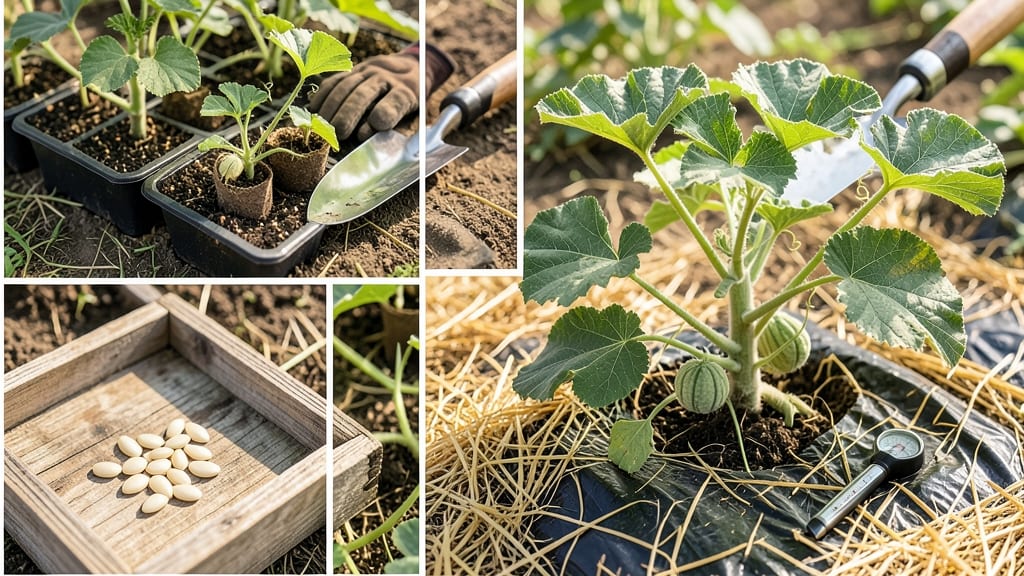
Timing your cantaloupe seeds in Texas can mean the difference between a bumper crop and a sad, wilted plant. With the right conditions, you’ll get juicy, sweet melons—plant too soon, and frost will ruin your hard work.
Texas gardeners know that patience and precision are key when it comes to warm-season crops like cantaloupe.
Cantaloupe thrives in heat, so waiting for soil temperatures to hit 75°F or higher is crucial for fast germination. In North Texas, this usually means holding off until late April or early May, while South Texas gardeners can start as early as mid-March.
The goal? Give those seeds the warmth they crave to avoid slow starts or failed sprouts.
But here’s the catch: even in Texas, early springs can be unpredictable. I’ll show you how to adjust your planting schedule based on your specific region, from Central Texas’s balanced climate to the extreme heat of the Rio Grande Valley.
You’ll also learn how to protect young plants from unexpected cold snaps and maximize your harvest window.
Ready to grow cantaloupe like a pro? Let’s break down the exact planting timeline, soil prep tips, and care tricks to ensure your vines produce melons faster than you can say “summer harvest.”
Texas heat-zone planting schedule for cantaloupe seeds (by region)
Cantaloupe thrives in Texas’s warm climate, but precise timing prevents frost damage and bolting. The ideal soil temperature for germination is 75°F+, and seedlings can’t handle frost—so knowing your USDA zone and last frost date is critical.
Texas spans USDA Zones 7b–9a, with North Texas facing later springs than South Texas.
For example, Dallas (Zone 8a) typically has its last frost around March 15, while Houston (Zone 9a) rarely sees frost. In El Paso (Zone 7b), gardeners wait until April 15 to avoid late freezes. Always check your local AgriLife Extension reports for updates.
Cantaloupe seeds need warm soil to germinate quickly—5–7 days in ideal conditions. If you plant too early, seedlings may rot in cold soil. Conversely, planting too late risks bolting (premature flowering) from Texas’s intense summer heat.
Here’s a region-specific planting timeline to maximize your harvest:
In North Texas, use black plastic mulch to warm soil faster if planting early. For South Texas, where summers are brutal, opt for heat-tolerant varieties like ‘Athena’ or ‘Hale’s Best’ to avoid bolting.
Always plant seeds ½ inch deep and space them 2–3 feet apart for proper vine growth.
If you’re in a microclimate (e.g., urban areas with heat islands), plant 1–2 weeks earlier than the regional average. Use a soil thermometer to confirm warmth—cantaloupe seeds won’t germinate below 65°F, even if the air is warm.
For container growing, start seeds indoors 4–6 weeks before your last frost date and transplant after soil warms. Containers dry out faster, so monitor moisture closely. Use a lightweight potting mix with 50% compost to retain heat.
Remember: Cantaloupe needs 75–100 days to mature. Planting too late in North Texas may mean harvests coincide with fall rains, increasing disease risk. Adjust your schedule to aim for July–August harvests in most regions.
🌱
Texas heat-zone planting schedule for cantaloupe seeds (by region)
Cantaloupe thrives in Texas's heat, but planting too early risks frost damage while waiting too late cuts your harvest short. The ideal soil temperature for germination is 75°F or warmer, which varies dramatically across Texas's three main regions—North, Central, and South.
Let’s break down the best planting windows for each, accounting for last frost dates and microclimates like urban heat islands.
In North Texas (USDA Zones 7b-8a), where last frosts typically hit March 15-April 1, wait until mid-April to early May for direct sowing. For Central Texas (Zones 8a-8b), plant late March to early April—soil warms faster here, but early starts can still face surprise chills.
Meanwhile, South Texas (Zones 9a-10a) gardeners can start as early as February, leveraging the region’s extended growing season.
🌱
| Region | USDA Zone | Last Frost Date | Best Planting Window | Soil Temp Goal |
|---|---|---|---|---|
| North Texas | 7b-8a | March 15-April 1 | Mid-April to early May | 75°F+ |
| Central Texas | 8a-8b | February 28-March 15 | Late March to early April | 75°F+ |
| South Texas | 9a-10a | January 15-February 15 | February to early March | 70°F+ |
For urban gardeners, city heat can push planting dates 1-2 weeks earlier than rural areas. Use a soil thermometer to confirm readiness—cantaloupe seeds won’t germinate below 60°F, and growth stalls under 70°F.
In North Texas, consider starter plants after Memorial Day for a guaranteed harvest before fall’s first frost (November 15-December 15).
Pro tip: Black plastic mulch warms soil 5-10°F faster than bare earth, letting you plant 2-3 weeks earlier in cooler zones. Pair this with drip irrigation to maintain consistent moisture—cantaloupe roots need 1-2 inches of water weekly once established.
Skip overhead watering to avoid powdery mildew, a common Texas issue.
If you’re in West Texas (Zones 7b-8a), where water is scarce, opt for drought-tolerant varieties like ‘Hale’s Best’ and plant near windbreaks to reduce moisture loss. In East Texas (Zones 7b-9a), humidity is your ally—just watch for vine borers and rotate crops annually to prevent soil-borne diseases.
Timing isn’t just about dates—it’s about heat accumulation. Cantaloupe needs 800-1,000 growing degree days (GDD) to mature. Use a GDD calculator (like AgriMet’s) to fine-tune your schedule based on your specific microclimate.
For example, San Antonio’s 9a zone can support two plantings: one in February and another in July for a fall harvest.
🌻