
Plants
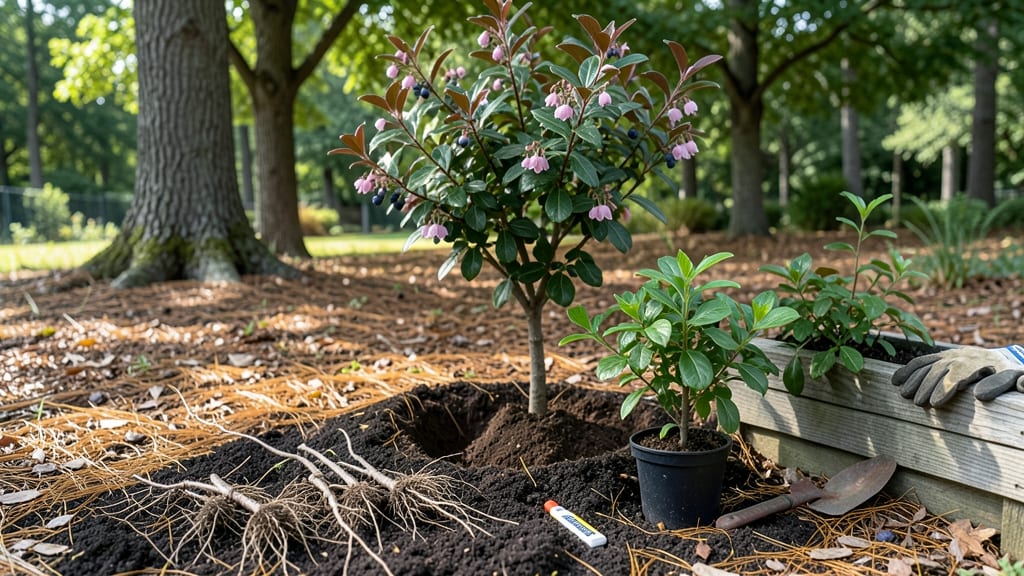
Timing your blueberry bush 🫐 planting in North Carolina isn't just about the calendar—it's about dodging frost, understanding your county's microclimate, and giving your bushes the best shot at thriving.
Plant too early, and you risk weak root growth before summer heat hits; too late, and your harvest could be months away. With USDA zones 6b-8a creating such varied conditions, knowing the exact window for your area is the key to success.
Most gardeners in NC swear by fall planting—September through October—when soil stays warm but nights cool down. This timing lets roots establish before winter dormancy, giving you a head start for next year's harvest.
But if you're in the mountains or Piedmont region, where frosts linger later, spring planting (February to early April) might be your best bet to avoid late-season cold snaps that can damage tender new growth.
Here's the game-changer: your county's last frost date. In Zone 6a areas like the western mountains, you might need to wait until mid-April to plant, while coastal Zone 8b regions can start as early as February.
We'll break down the exact frost-free windows by county so you can plant with confidence, whether you're in the humid lowlands or the cooler highlands.
Ready to get started? I'll walk you through soil prep, the best local nurseries for NC-adapted varieties, and how to adjust your timing based on whether you're growing southern highbush or northern highbush types.
Let's make sure your blueberry bushes are in the ground at exactly the right moment for maximum yield.
Best planting months for blueberry bushes in NC by county hardiness zones
North Carolina's diverse USDA hardiness zones (6b-8a) mean your blueberry planting window depends heavily on where you live. In the mountain regions (Zone 6b), like Asheville, you'll want to plant earlier to avoid late spring frosts, while coastal areas like Wilmington (Zone 8a) have a longer frost-free season.
Let's break down the ideal planting months by zone to maximize your first harvest in 2-3 years.
For most of North Carolina, the best time to plant blueberries is during dormancy—either in late fall (September-October) or early spring (March-April). Fall planting gives roots time to establish before winter, while spring planting avoids winter stress.
However, Zone 7b and below (like Raleigh and Greensboro) face higher frost risks, so timing becomes even more critical.
Here’s a quick reference for your county’s frost-free window and ideal planting months:
If you're in Zone 6b (mountains), prioritize fall planting (September-October) to give roots time to harden off before winter. In Zone 8a (coastal), you can plant as late as November or even February in early spring, thanks to milder winters.
However, Zone 7b (central) is the most finicky—plant too late, and late spring frosts can damage new growth.
For container-grown blueberries, timing is slightly more flexible. You can plant year-round in Zone 8a, but avoid extreme heat (June-August) or cold snaps (December-February). If you’re in Zone 6b-7a, stick to fall or early spring to prevent winter dieback.
Pro tip: Check your local Cooperative Extension Service for county-specific frost dates. For example, Asheville (Zone 6b) often sees late frosts in May, while Wilmington (Zone 8a) rarely drops below freezing after January. This data can shift your planting window by 2-4 weeks.
Once you’ve nailed down the planting month, focus on soil prep. Blueberries thrive in acidic soil (pH 4.5-5.5), so test your soil 4-6 weeks before planting.
If your soil is too alkaline, amend it with sulfur or peat moss. In sandy soils (common in coastal NC), mix in compost to retain moisture.
After planting, mulch with pine straw or wood chips to maintain soil acidity and retain moisture. In drought-prone Piedmont areas, mulch also protects roots from summer heat stress. Water deeply 1-2 times per week for the first 60 days to encourage root growth.
Remember, blueberries need full sun (6+ hours daily). In shady Piedmont gardens, growth will be slower, and fruit production may be 50% lower. Choose a south-facing spot with minimal afternoon shade to maximize berry yields.
🫐
Best planting months for blueberry bushes in NC by county hardiness zones
North Carolina’s diverse USDA zones 6b-8a mean your blueberry planting window varies dramatically from the mountains to the coast.
In Zone 6b (western NC), you’ll want to wait until mid-April to avoid late frosts, while Zone 8a gardeners in the coastal plains can start as early as late February. This regional difference ensures roots establish before summer heat arrives.
Most NC gardeners prefer fall planting (September-October) because warm soil and cooler nights help roots grow before winter dormancy. However, if you’re in Zone 7b or cooler, spring planting (February-April) often works better to avoid early frost damage.
Local nurseries like Blueberry Hill Nursery in Hendersonville recommend checking your county’s last frost date—available on the NC State Climate Office website—for precise timing.
Here’s a quick breakdown of optimal planting windows by zone to help you plan:
| USDA Zone | Best Planting Window | Key Consideration |
|---|---|---|
| 6b (Mountains) | Mid-April to early May | Late frosts common; wait until soil warms |
| 7a (Piedmont) | Late March to April | Moderate frost risk; spring planting ideal |
| 7b (Central NC) | February to March or September | Flexible; fall preferred for root growth |
| 8a (Coastal) | Late February to March | Early start avoids summer heat stress |
For southern highbush varieties (like ‘Premier’ or ‘Star’), which thrive in Zones 7-9, early spring planting (February-March) works well. Northern highbush types (e.g., ‘Bluecrop’), better suited for Zones 4-7, benefit from fall planting to establish roots before winter. Always choose NC-adapted varieties from local nurseries to ensure climate compatibility.
Pro tip: If you’re in a transition zone (e.g., Zone 7b), consider container growing for flexibility. Move pots indoors during unexpected frosts or to a sheltered spot in winter. This method also lets you adjust soil acidity (critical for blueberries!) more easily than in-ground plantings.
Once you’ve nailed your planting window, the next step is adjusting for your local microclimate. Coastal areas with high humidity need well-draining soil to prevent root rot, while mountain regions may require extra mulch to protect roots from freezing temps.
We’ll cover these adjustments in the next section to ensure your blueberries thrive year-round.