
Plants
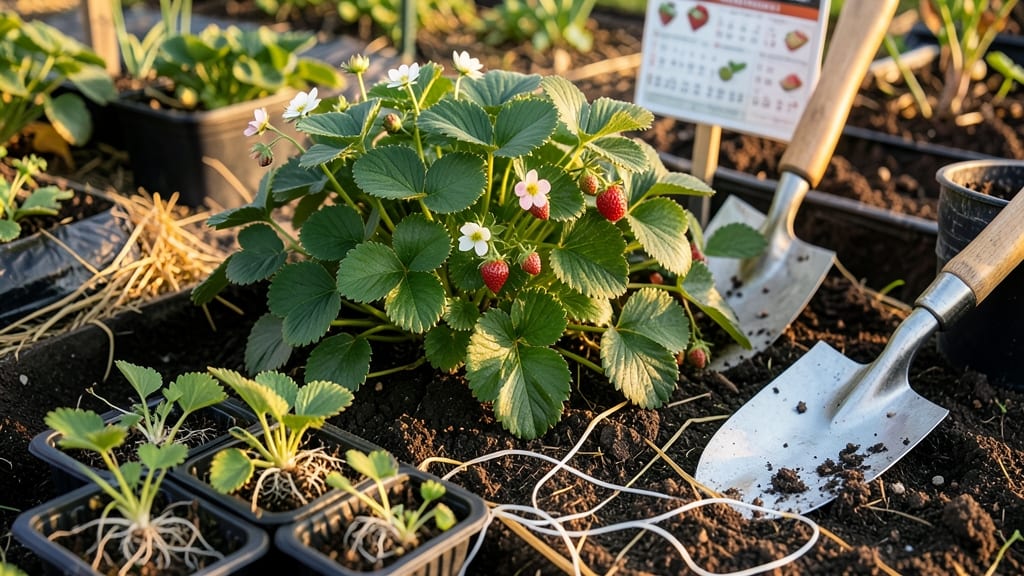
There’s nothing like knowing when to plant strawberries in New York—because biting into a homegrown strawberry 🍓 at peak ripeness is a reward worth the effort.
But if you’re a New York gardener, you know the difference between a thriving patch and a failed harvest often comes down to one key question: when do you plant strawberries in New York?
The answer isn’t as simple as “springtime.” June-bearing varieties demand precise timing to align with frost dates in zones 5b-7b, while everbearing types need two planting windows for continuous harvests. Get it wrong, and you might miss the entire season—or worse, invite pests and disease.
I’ve seen firsthand how a single week’s delay can turn a promising bed into a disappointment.
In this guide, I’ll break down the perfect planting windows for both types, including soil prep secrets and when to choose bare-root vs. potted plants.
Whether you’re in NYC or Upstate, you’ll learn how to set your strawberries up for success—so you can enjoy that first harvest from June through August (or even longer with everbearing varieties).
Let’s get your strawberries in the ground at the ideal moment—because in gardening, timing really is everything.
New York strawberry planting calendar: June-bearing vs. everbearing varieties explained
New York’s USDA zones 5b-7b create unique challenges for strawberry growers. The last frost date (typically mid-April in western NY to late April in NYC) and first frost (mid-October to late October) dictate your planting windows.
June-bearing varieties produce one massive harvest in early summer, while everbearing types yield two smaller harvests—spring and fall.
For June-bearing strawberries, the ideal planting window is late March to early April (bare-root) or April to early May (potted plants). Everbearing varieties, however, can handle two planting opportunities: early spring (March-April) or early fall (September-October) for a fall harvest.
Soil temperatures below 40°F can stunt root growth, so wait until the ground thaws.
New York’s microclimates matter—Upstate areas like Buffalo (Zone 6b) can plant 2 weeks earlier than NYC (Zone 7b). Use row covers if planting in March to protect from late frosts. Everbearing varieties like ‘Seascape’ or ‘Albion’ are more frost-tolerant, making them better for fall planting.
🌱
| Variety Type | Best Planting Window | Harvest Time | NY-Specific Notes |
|---|---|---|---|
| June-Bearing | Late March–Early April (bare-root) or April–Early May (potted) | Late June–July (one massive harvest) | Plant ‘Honeoye’ or ‘Chandler’; use row covers for early March plantings. |
| Everbearing | Early Spring (March–April) OR Early Fall (September–October) | June (spring) + September–October (fall) | Choose ‘Seascape’ or ‘Albion’; fall planting avoids summer heat stress. |
| Day-Neutral | April–May (best for NYC’s shorter summers) | June–September (continuous harvest) | Try ‘Tristar’; thrives in containers for urban gardens. |
Bare-root strawberries are cheaper and easier to plant but require immediate watering after transplanting. Potted plants cost more but give you a head start and are ideal for late spring plantings if the ground stays cold. Soak bare-root plants in lukewarm water for 1 hour before planting to revive roots.
Soil temperature is critical—wait until the ground reaches 45°F at 4-inch depth. Use a soil thermometer to check, especially in Upstate NY, where cooler soils linger longer.
Everbearing varieties planted in September can produce fall fruit before winter, but avoid planting after mid-October to allow roots to establish.
For container gardening in NYC, plant everbearing varieties in 5-gallon pots by late April to enjoy summer and fall harvests. Use well-draining potting mix with 20% perlite to prevent root rot. Containers warm up faster than garden beds, so monitor watering frequency closely during hot July weeks.
💧
After planting, mulch heavily with straw or shredded leaves to retain moisture and suppress weeds. This is especially important in Upstate NY’s dry summers.
June-bearing varieties benefit from removing flowers in the first year to redirect energy to root growth, while everbearing types can bear fruit immediately if planted in fall.
New York’s variable weather means flexibility is key. If spring arrives late, opt for potted plants or delay until May. For fall plantings, aim for 6 weeks before first frost to allow roots to establish.
Everbearing varieties like ‘Jewel’ are frost-hardy and can survive light freezes, making them perfect for September-October additions.
How to prepare your New York garden for strawberry planting success
Preparing your garden for strawberries in New York isn’t just about digging a hole—it’s about creating the perfect soil conditions and microclimate to outsmart the region’s challenges. From NYC’s urban heat islands to Upstate’s heavy clay soils, New York’s diverse growing zones demand tailored prep work.
I’ve learned that amending soil 4-6 weeks before planting gives nutrients time to integrate, while mulching strategies can mean the difference between thriving plants and struggling ones.
Start by testing your soil pH—strawberries thrive in slightly acidic soil between 5.5 and 6.8. If your soil tests higher, mix in peat moss or sulfur; for alkaline soils, add elemental sulfur or pine needles.
My Upstate garden’s clay soil needed 30% compost mixed into the top 12 inches to improve drainage and aeration. For urban gardeners, container growing with well-draining potting mix is often the best solution.
Remove weeds and debris. Use a broadfork to loosen soil 12-18 inches deep without turning it over (preserves soil structure).
Mix in 4-6 inches of compost or aged manure. For sandy soils, add 20% peat moss; for clay, use coarse sand.
Test pH and amend: Lime for acidity (if pH <5.5) or sulfur for alkalinity (if pH >6.8). Wait 2-4 weeks before planting.
For poor drainage, create 6-inch-tall beds with a 50/50 mix of soil and compost. Add gravel at the bottom for drainage.
Interplant with bush beans, lettuce, or spinach (shade-tolerant companions). Avoid planting near potatoes or tomatoes (shared diseases).
Apply 3-4 inches of straw mulch after planting to retain moisture and suppress weeds. Replace annually.
New York’s unpredictable springs can throw off even the best-laid plans, so I recommend installing a soil thermometer to monitor temperatures. Strawberries need soil that’s at least 45°F for planting—wait until late April in most of NY (earlier in western regions like Rochester).
For everbearing varieties, a second fall planting in September works best when soil temps stay above 50°F for 6+ weeks.
Urban gardeners face unique challenges like limited space and heat reflection from buildings. If you’re growing in containers, choose dwarf varieties like 'Albion' and use black pots to absorb heat in cooler microclimates.
I’ve seen containers dry out 30% faster than in-ground beds, so watering every 3-4 days is critical during dry spells. For in-ground plantings, drip irrigation keeps foliage dry, reducing fungal risks like gray mold.
Finally, don’t overlook pest prevention. New York’s slugs and birds are notorious strawberry thieves. Set up copper tape barriers around beds and use row covers for early plantings. I’ve had success with diatomaceous earth around plants to deter slugs without chemicals.
With the right prep, your strawberries will establish strong roots and reward you with sweeter, larger fruit—worth every extra step!