
Plants
The perfect time to plant blueberries in Zone 8b isn’t just about the calendar—it’s about matching your shrubs’ chill-hour needs to your local frost patterns. If you’ve ever watched your 🫐 bushes struggle or fail to fruit, you’re not alone: timing is everything, especially when balancing 450–600 chill-hours with Zone 8b’s mild winters.
Most gardeners in 8b assume spring is the only option, but fall planting can actually give your blueberries a head start—if you time it right. The key is avoiding late frosts (after February 15) while ensuring soil temps are cool enough for root establishment.
I’ll break down the exact window, plus how to prep your soil for maximum success.
You’ll also discover which blueberry varieties thrive in 8b’s heat (hint: ‘Duke’ and ‘Premier’ are top performers) and how to adjust your schedule if your microclimate runs warmer or cooler than average. No more guessing—just data-driven planting for a bountiful harvest.
Ready to transform your backyard into a blueberry powerhouse? Let’s dive into the step-by-step schedule that’ll have your bushes bursting with fruit by May or June—without the common pitfalls that sabotage so many first-time planters.

Zone 8b blueberry planting timeline: chill-hours explained
Blueberries thrive in Zone 8b, but their chill-hour requirements (450–600 hours below 45°F) make timing critical. Most varieties need these hours to break dormancy and flower properly.
In Zone 8b, where winters are mild, late winter to early spring is ideal for planting—typically between February and March—when soil temperatures rise above 40°F.
Zone 8b’s microclimates vary wildly—coastal areas may get more chill hours than inland spots. Check your local last frost date (usually around February 15) and plant 4–6 weeks before to give roots time to establish before summer heat arrives.
Fall planting is risky unless you’re in a cooler microclimate, as young plants may not harden off before first frost (around November 15).
For Southern Highbush varieties like 'Climax' or 'Tifblue,' which need 300–400 chill hours, early spring is non-negotiable. Rabbiteye varieties like 'Duke' (500+ chill hours) can handle slightly later planting but still prefer February–March.
Always choose varieties matched to your local chill-hour totals—mismatches lead to poor flowering and fewer berries.
| Planting Window | Chill-Hour Needs | Soil Temp | Zone 8b Risk |
|---|---|---|---|
| Late February | 450–600 hrs | 40–45°F | Low (established roots) |
| Early March | 300–400 hrs | 45–50°F | Moderate (heat stress) |
| Late March | <200 hrs | 50–55°F | High (dormancy break failure) |
| Fall (Oct–Nov) | All varieties | 55–65°F | Very High (frost damage) |
If you’re planting in February, aim for bare-root plants to give roots time to knit before summer. Container-grown blueberries can go in slightly later (March) but need daily watering to prevent transplant shock.
Avoid planting after March 15 unless you’re in a high-elevation microclimate—summer’s heat will stress young plants before they’re established.
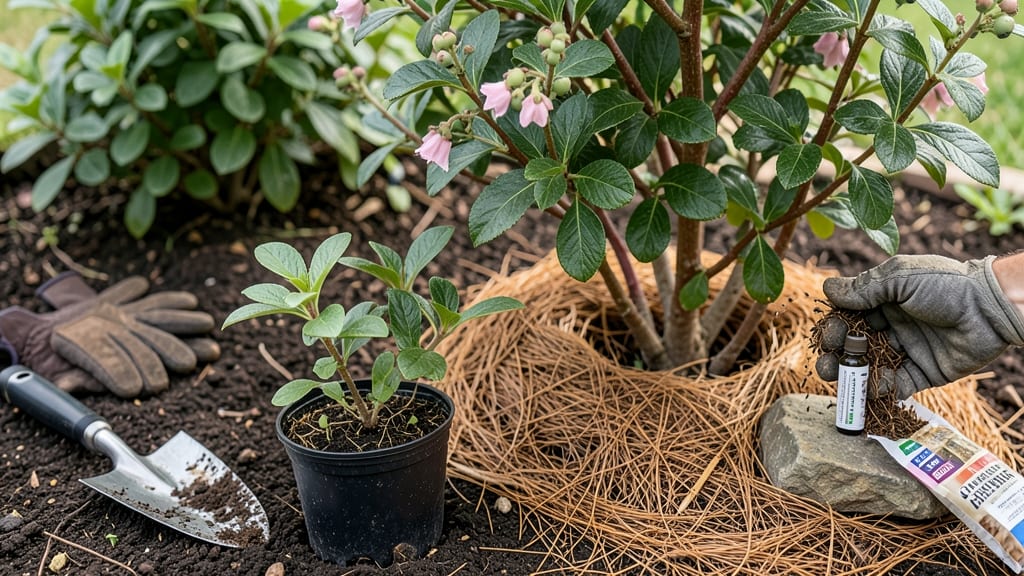
Pro tip: Mulch heavily (3–4 inches of pine straw or wood chips) after planting to retain moisture and regulate soil temperature. In Zone 8b, mulch also protects roots from wild temperature swings between day and night.
Pair this with a drip irrigation system to deliver consistent moisture without wetting the foliage (which invites fungal diseases like botrytis).
Watch for late-season frosts in Zone 8b—even after your average last frost date. If nighttime temps dip below 32°F in April, cover young plants with frost cloth or row covers. Varieties like 'Premier' (500+ chill hours) are more frost-tolerant once established, but new growth is always vulnerable.
For container growing, plant in March and use 5-gallon pots minimum to stabilize soil temps. Containers dry out faster in Zone 8b’s heat, so check soil moisture daily during the first month. Elevate pots slightly to improve drainage—blueberries hate soggy roots and will decline if waterlogged.
Remember: Chill hours ≠ frost dates. A variety might meet its chill-hour needs by January, but planting too early means roots sit idle in cold soil.
Wait until soil temps are consistently above 40°F—usually mid-to-late February—to balance dormancy break and root growth. This is your sweet spot for Zone 8b success.
🌱
Zone 8b blueberry planting timeline: chill-hours explained
In Zone 8b, where winters are mild but still require 450–600 chill-hours, timing your blueberry planting is all about balancing frost dates and variety needs.
Most gardeners here assume spring is the only option, but fall planting can give your bushes a head start—if you avoid late frosts after February 15.
Your chill-hour total determines whether you can grow highbush (600+ hours) or rabbiteye (450+ hours) varieties. For example, 'Duke' (a rabbiteye) thrives in 8b with its 500 chill-hours, while 'Premier' (highbush) may struggle unless you plant early enough to accumulate enough cold.
Here’s the critical timeline for Zone 8b:
| Stage | Action | Notes |
|---|---|---|
| Late Winter (Feb) | Soil prep (pH 4.5–5.5) | Test soil; amend with sulfur if needed. |
| Early Spring (Mar) | Plant bare-root or potted bushes | After last frost (post-Feb 15). |
| Fall (Oct–Nov) | Alternative planting window | 6–8 weeks before first frost (Nov 15). |
| Spring (Apr) | Fertilize (10-10-10) | Encourages new growth post-planting. |
Fall planting works in 8b because your bushes establish roots before winter, but avoid planting after October 15—new roots won’t harden before frost. For spring, aim for March 1–15 to ensure soil is workable but frost-free.
Pro tip: Use mulch (pine needles) to retain moisture and acidify soil naturally. This is especially critical in 8b’s hot summers, where soil pH can spike without organic cover.
If your microclimate runs warmer (e.g., near urban heat islands), opt for early March planting to avoid heat stress. For cooler pockets, late February may work—just monitor frost forecasts.
🌱