
Plants
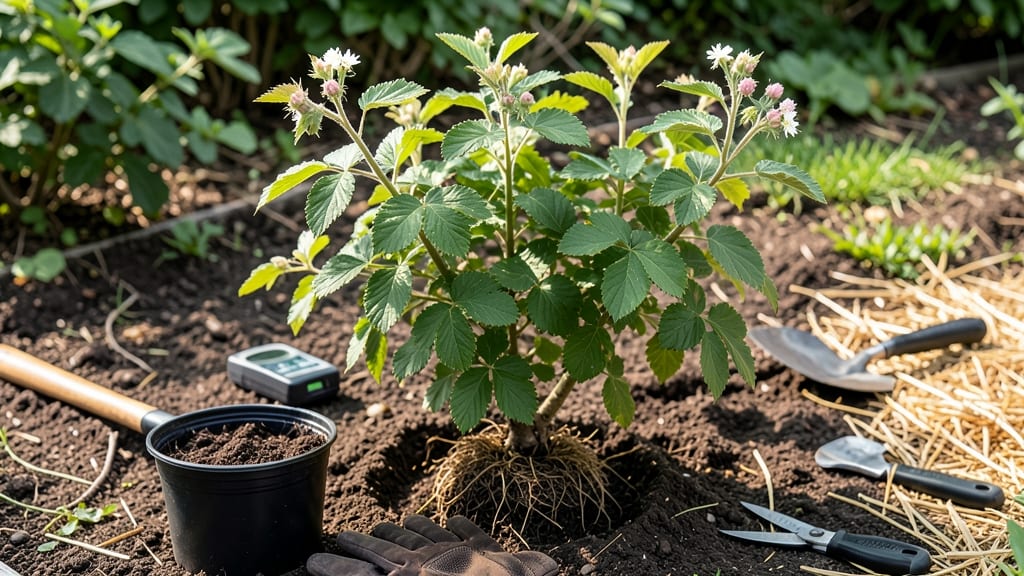
Planting blackberries in Georgia isn’t just about grabbing a cane and sticking it in the ground—it’s about timing the chill hours right to ensure your 🫐 thrives in the heat.
If you miss the ideal window, you could end up with weak canes or no fruit at all, especially in zones 7b-8b where summers are long and intense.
Most gardeners in Georgia swear by late winter to early spring as the perfect time to plant, but there’s more to it than just the calendar. The key is understanding chill hour requirements—your blackberries need 300-600 hours below 45°F to set fruit properly.
Without enough chill, your plants might just sit there looking pretty but never producing.
I’ve seen firsthand how a little prep work—like amending heavy clay soil and setting up a trellis—can make all the difference. Whether you’re planting bare-root canes or potted varieties like ‘Arapaho’ or ‘Navaho,’ the right soil and support system will help your blackberries beat Georgia’s humidity and heat.
Ready to avoid the common mistakes that leave Georgia gardeners frustrated? Let’s break down exactly when, where, and how to plant for a bountiful harvest from May through August.
Georgia blackberry planting zones & chill hour requirements
Georgia’s USDA zones 7b-8b create a unique challenge for blackberry growers—too much heat without enough winter chill can stunt fruit production. Most blackberry varieties need 300-600 chill hours (temperatures between 32°F and 45°F) to set fruit properly.
In Georgia, this typically means planting late winter to early spring (January-March) when soil temperatures rise but frost risks decrease.
If you’re unsure about your chill hours, check the NOAA Climate Data for your county or use a local Cooperative Extension Service report. For example, Athens (Zone 8a) averages 500 chill hours, while Savannah (Zone 8b) gets around 400.
This means choosing varieties like 'Arapaho' (500+ chill hours) or 'Navaho' (400+ chill hours) will give you the best chance at a productive harvest.
Timing is everything—planting bare-root canes in January or February gives roots time to establish before the heat of summer, while potted plants can go in until early March. Avoid planting in April or later, as the heat stress can delay root growth and reduce next year’s fruit set.
For container growing, blackberries thrive in Georgia’s heat but need protection from afternoon sun in Zone 8b areas. Use 5-gallon pots with well-draining soil and place them in morning sun with afternoon shade. This mimics the natural microclimate of Georgia’s woodland edges, where blackberries often grow wild.
| Factor | Georgia-Specific Details |
|---|---|
| USDA Zones | 7b-8b (Athens: 8a, Savannah: 8b, Atlanta: 7b) |
| Chill Hours Needed | 300-600 (varies by variety) |
| Best Planting Window | Late January - Early March (bare-root) / Early March (potted) |
| Last Frost Date | Mid-March (varies by region) |
| Top Varieties for Georgia | 'Arapaho' (500+ chill), 'Navaho' (400+ chill), 'Chester' (thornless) |
| Container Considerations | 5-gallon pots, morning sun, afternoon shade in Zone 8b |
One of the biggest mistakes Georgia gardeners make is planting thornless varieties like 'Chester' without considering their chill hour needs. While thornless types are easier to harvest, they often require 500+ chill hours, which may not be met in Savannah or coastal areas.
Instead, opt for 'Natchez' (thornless, 400+ chill) or stick with traditional types like 'Ouachita' for better reliability.
For container growing, remember that pots heat up faster in Georgia’s summer. Use black fabric pots to absorb heat during the day and release it slowly at night. Add 1 inch of mulch (pine bark or straw) to retain moisture and protect roots from temperature swings.
This is especially critical in Atlanta’s Zone 7b, where summer afternoons can exceed 90°F.
If you’re planting in late winter, cover young canes with row fabric for the first few weeks to protect against unpredictable late frosts. Remove the fabric once new growth appears (typically by mid-March in most of Georgia).
This simple step can double your survival rate for newly planted blackberries.
Finally, consider planting dates by region:
- North Georgia (Zone 7b): Late February to early March
- Central Georgia (Zone 8a): Early March
- South Georgia/Coastal (Zone 8b): Late February (bare-root only)
This regional approach ensures your blackberries get the perfect chill-to-warm transition for optimal fruit production.
With the right timing and variety selection, your Georgia blackberry patch can thrive year after year—just don’t wait until spring to plant! 🫐
Step-by-step soil preparation for blackberries in Georgia’s climate
Georgia’s heavy clay soil can be a blackberry grower’s worst nightmare—it drains poorly, compacts easily, and suffocates roots. The key to success? Amending your soil with organic matter to create a loose, well-draining mix that mimics the sandy-loam blackberries love.
Without this prep, your plants will struggle to establish roots, leading to weak canes and poor fruit production.
Start by testing your soil’s pH level (aim for 5.5-6.5), which is critical for nutrient uptake. Georgia’s native soils often lean acidic, so you may need to add lime if your test shows pH below 5.5.
Use a simple home test kit or send a sample to your local UGA Extension office for precise results. This small step saves you from guessing—and potential failure.
Test Soil pH
Use a home test kit or submit to UGA Extension for accuracy. Target pH 5.5-6.5 for optimal growth.
Amend with Organic Matter
Mix in 3-4 inches of compost or pine bark fines to improve drainage and aeration.
Create Planting Mounds
Build 12-inch-high mounds to prevent waterlogging and improve airflow around roots.
Install Drainage
Add gravel or sand to the bottom of planting holes if clay is extremely dense.
Once you’ve adjusted the pH, it’s time to loosen the soil to a depth of 12-18 inches. Use a broadfork or tilling machine to break up compacted layers without disturbing the soil structure too much.
This step is non-negotiable in Georgia, where clay can become as hard as concrete when dry. After loosening, mix in 3-4 inches of compost or pine bark fines to improve drainage and provide essential nutrients.
For the best results, create planting mounds that are 12 inches high and 2 feet wide. This elevation helps prevent waterlogging during Georgia’s frequent summer rains and improves airflow around the roots.
Place your blackberry canes on top of these mounds, spacing them 4-6 feet apart to allow for proper airflow and future growth. This simple elevation trick can double your yield by reducing fungal diseases like anthracnose, which thrives in soggy soil.
Finally, consider mulching with straw or pine needles to retain moisture and regulate soil temperature. In Georgia’s heat, mulch acts like an insulator, keeping roots cool during scorching afternoons. Just avoid piling mulch directly against the stems—leave a 2-inch gap to prevent rot.
With these steps, your blackberries will have the perfect foundation to thrive in Georgia’s challenging climate.
🌱