
Plants
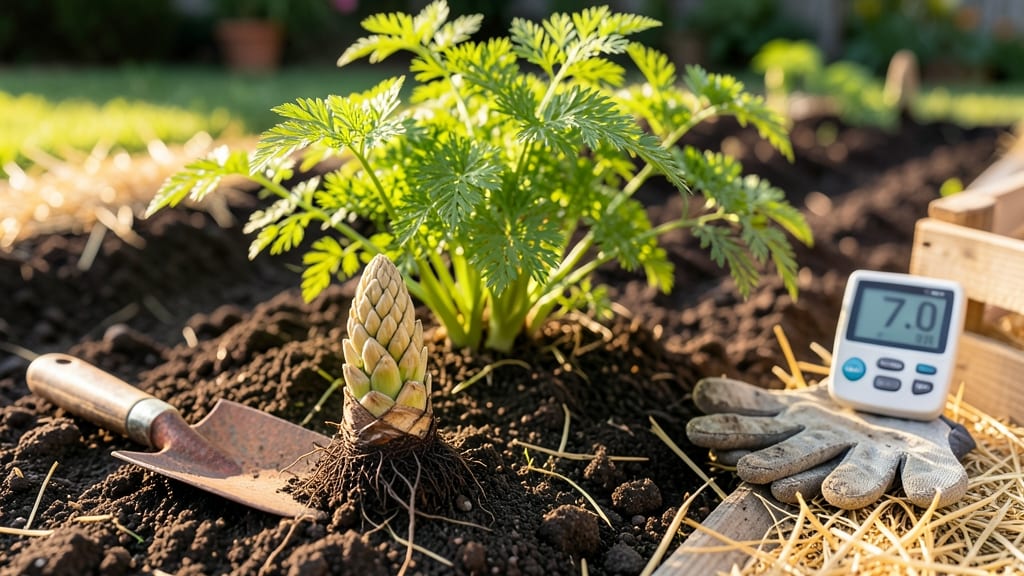
Timing your asparagus planting in Alabama can mean the difference between a bountiful harvest and wasted effort. With the right frost-free window, you’ll give your 🌱 crowns the strong start they need to thrive in the state’s 7a-8b zones.
Most gardeners know spring is ideal, but Alabama’s mild winters also allow for fall planting—just three months before the first frost. The key is preparing soil rich in organic matter and planting 1-year-old crowns deep enough to protect roots from summer heat.
In this guide, I’ll break down the exact months to plant, soil prep secrets for Alabama’s clay-heavy dirt, and how to adjust for your region’s microclimate. Whether you’re a first-timer or a seasoned gardener, these tips will help you grow healthier asparagus faster.
Ready to skip the guesswork? Let’s dive into the perfect planting schedule for your Alabama garden.
Alabama asparagus planting timeline by month: avoid frost & heat stress
Alabama gardeners know timing is everything—especially for asparagus, a perennial that needs precise planting windows to thrive. The state’s USDA Zones 7b-8a offer two ideal planting periods: early spring and fall.
Planting outside these windows risks frost damage or heat stress, both of which can stunt root growth.
Northern Alabama (e.g., Huntsville) has later frost dates (mid-April) compared to southern regions (e.g., Mobile), where fall planting can extend into early November.
Always check your local last frost date—aim to plant asparagus 2-3 weeks before the average last frost for spring or 6-8 weeks before the first frost for fall.
Soil temperature is just as critical as air temperature. Asparagus crowns need soil temps between 60°F and 70°F to establish roots quickly. In Alabama, this typically aligns with February-March for spring and September-October for fall.
Use a soil thermometer to confirm—planting too early in cold soil can lead to rot.
Here’s your month-by-month breakdown, tailored to Alabama’s microclimates:
| Month | Planting Window | Soil Temp Goal | Key Notes |
|---|---|---|---|
| January | ❌ Avoid (too cold) | Below 50°F | Risk of frost damage |
| February | ✅ Best for North AL | 55°F–65°F | Wait until soil warms |
| March | ✅ Ideal for all regions | 60°F–70°F | Plant before last frost |
| April | ⚠️ Late spring (risky) | Above 70°F | Heat stress possible |
| May | ❌ Avoid (too hot) | Above 80°F | Wait for fall |
| September | ✅ Best for South AL | 65°F–75°F | Plant 6–8 weeks before frost |
| October | ✅ Ideal for all regions | 55°F–65°F | Avoid late October (frost risk) |
| November | ⚠️ Late fall (risky) | Below 50°F | Only for South AL |
For spring planting, focus on February-March in northern Alabama or March-April in southern regions. In fall, September-October is ideal—this gives roots time to establish before winter dormancy. If you miss these windows, consider container growing to control soil temperature.
Pro tip: Mulch heavily after planting to retain soil warmth and moisture. Use straw or wood chips (3–4 inches thick) to protect crowns from temperature swings. This is especially critical in Alabama’s humid climate, where crown rot thrives in soggy soil.
Remember, asparagus is a 3-year investment. The first year focuses on root growth—no harvest! Years 2–3 yield light spears, and full production starts in year 4. Planting at the right time ensures your asparagus bed becomes a high-yielding perennial for decades.
How to prepare Alabama soil for asparagus: pH, drainage & organic matter secrets
Alabama’s clay-heavy soils can be a double-edged sword for asparagus—too dense, and roots suffocate; too sandy, and nutrients wash away. The key is creating a loamy, well-draining bed that mimics the plant’s natural Mediterranean habitat.
Start by testing your soil’s pH level, which should sit between 6.5 and 7.0 for optimal growth.
If your soil tests too acidic, amend it with lime (calcium carbonate) at a rate of 5-10 pounds per 100 square feet, working it into the top 12 inches of soil.
For alkaline soils, sulfur or peat moss will lower the pH gradually. Spread amendments evenly and water deeply to activate the changes.
Crown Rot Risk: Alabama’s humid climate makes asparagus prone to crown rot if soil stays soggy. Avoid planting in low-lying areas where water pools. Instead, raise beds by 6-12 inches or install French drains if your yard has poor drainage.
Use coarse sand or perlite to break up clay without altering nutrient levels. Mix in composted manure or well-rotted leaves to improve structure and fertility.
Asparagus roots need deep, loose soil to spread horizontally and vertically. Before planting, till the soil to a depth of 12-18 inches, removing any rocks or debris that could hinder root growth.
Add aged compost or peat moss at a ratio of 1 part organic matter to 3 parts soil to boost fertility without compacting the bed.
Incorporate a slow-release fertilizer like 10-10-10 NPK at planting time to provide essential nutrients without burning young roots. Spread 1/2 cup per 10 feet of row and mix it into the top 6 inches of soil.
This ensures your asparagus has the energy it needs to establish strong roots before the first harvest.
Mulch the bed with straw or pine needles after planting to retain moisture and regulate soil temperature. A 3-4 inch layer will suppress weeds while keeping the soil cool in summer and insulating roots in winter. Avoid wood chips, which can rob nitrogen from the soil as they decompose.
Finally, water the bed deeply once a week during the first growing season to encourage root penetration. Alabama’s summer heat can dry out soil quickly, so monitor moisture levels by sticking your finger 2 inches deep—if it feels dry, it’s time to water.
Consistent moisture is critical for preventing root stress and ensuring a healthy start.