
Plants
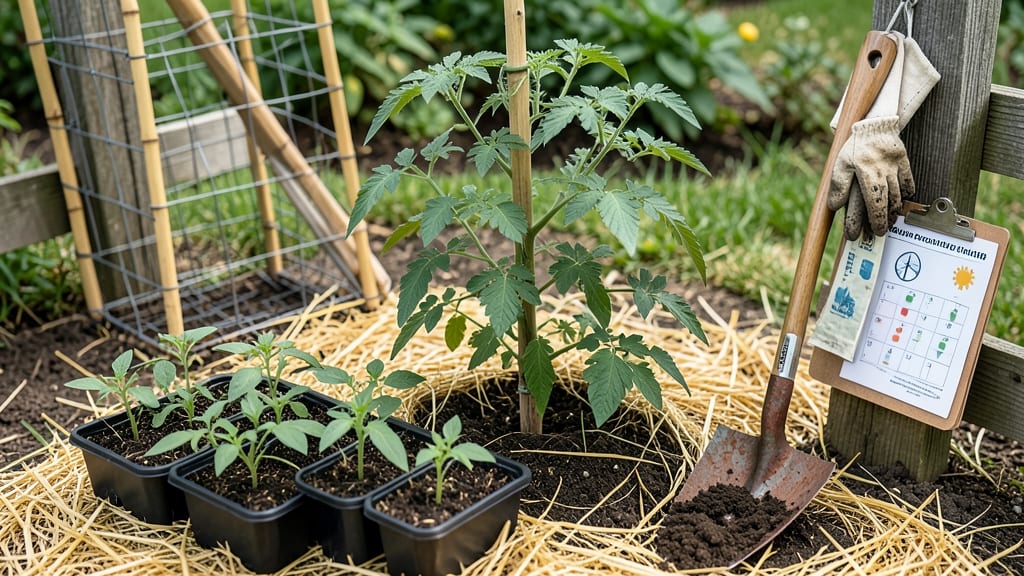
When should you plant tomatoes in Oklahoma? Timing your 🍅 tomato planting in Oklahoma isn’t just about the calendar—it’s about surviving the state’s wild swings from frost to scorching heat. Get it wrong, and your plants might bolt before fruiting or wilt under early summer blazes. But nail the perfect weeks for your microclimate, and you’ll enjoy homegrown tomatoes from June through October.
Most Oklahoma gardeners know the general rule: plant after the last frost, but the devil’s in the details. Whether you’re in the humid southeast or the dry panhandle, soil temperatures and local frost dates vary wildly.
I’ll break down exactly when to start seeds indoors vs. direct-sowing outdoors, so you avoid common pitfalls like stunted growth or blight.
You’ll also discover how to adjust for Oklahoma’s unpredictable weather—like using row covers for early starts or choosing heat-tolerant varieties. These strategies ensure your tomatoes thrive even when Mother Nature throws curveballs.
By the end, you’ll know not just when to plant, but how to give your tomatoes the best shot at a bountiful harvest.
From Oklahoma City’s urban heat islands to rural areas with cooler nights, we’ll cover it all. Ready to grow like a pro?
Oklahoma tomato planting calendar by region: exact weeks for frost-free success
Oklahoma’s last frost dates vary wildly—from early March in the southeast to late April in the panhandle—so planting tomatoes at the wrong time can mean lost crops.
The key is aligning your schedule with soil temperatures (wait for 55°F+) and your local microclimate, whether you’re in humid Tulsa or arid Lawton. Below, I’ve broken down the optimal planting windows by region, including adjustments for direct sowing vs. transplanting.
For central Oklahoma (Oklahoma City, Stillwater), aim to plant transplants after April 15 or direct-sow seeds by May 1. These areas typically see their last frost around March 20-25, but soil often lingers below 55°F until mid-April.
Use black plastic mulch to warm the soil faster if you’re eager to start early.
In the southeast (Tulsa, Muskogee), where humidity spikes earlier, you can push planting to mid-April for transplants or late April for seeds. The region’s longer growing season (up to 210 frost-free days) lets you experiment with fall planting too—sow seeds by August 1 for a late harvest.
The panhandle (Amarillo, Lawton) has a shorter window: plant transplants by April 20 or seeds by May 1, as first frost often hits by November 1. Choose early-maturing varieties (like ‘Early Girl’) to maximize your 180 frost-free days.
Urban gardeners in heat islands (e.g., downtown OKC) may plant 1-2 weeks earlier thanks to microclimates that warm faster.
| Region | Last Frost | Transplant Window | Direct Sow Window | Fall Planting |
|---|---|---|---|---|
| Southeast (Tulsa) | March 10-15 | April 10-20 | April 25-May 10 | August 1-15 |
| Central (OKC) | March 20-25 | April 15-May 1 | May 1-15 | August 15-Sept 1 |
| West (Lawton) | March 15-20 | April 10-April 25 | April 25-May 10 | July 30-Aug 15 |
| Panhandle (Amarillo) | March 25-April 5 | April 15-May 1 | May 1-15 | July 15-Aug 1 |
If you’re starting seeds indoors, begin them 6-8 weeks before your last frost date. For central OK, that means mid-January to early February. Use grow lights to provide 14-16 hours of light daily, and harden off seedlings for 7-10 days before transplanting.
Seedlings should be 4-6 inches tall with 2-3 sets of true leaves when planted outdoors.
For container gardening, adjust your timeline by 1-2 weeks earlier—pots warm up faster than soil. Place containers in south-facing spots and use self-watering systems to prevent drought stress.
Dwarf varieties like ‘Tiny Tim’ thrive in 5-gallon buckets and can be planted as late as May 15 in most regions.
Pro tip: Check the Oklahoma Mesonet for real-time soil temps. Aim for 60°F+ at a 4-inch depth—this ensures roots grow quickly and avoids blossom-end rot. If your soil is still cold, delay planting or use row covers to protect young plants.
Remember, Oklahoma’s unpredictable weather means your neighbors’ tomatoes might ripen weeks before yours. Stay flexible, monitor forecasts, and don’t hesitate to extend your season with mulch or cold frames if frost threatens early.
How to adjust tomato planting for Oklahoma’s unpredictable weather patterns
Oklahoma’s weather can shift from freezing nights to 100°F heatwaves in a single week. That’s why flexible planting strategies are your best defense. If you plant too early, a late frost can wipe out seedlings.
Too late, and your tomatoes struggle in summer’s intensity. The key? Adaptable tactics like row covers, heat-tolerant varieties, and smart mulching.
Start by checking soil temperatures with a thermometer—tomatoes need at least 60°F to thrive. In western Oklahoma, where springs are drier, wait until mid-May for direct sowing. In the humid southeast, you might plant as early as mid-April, but always have row covers ready for cold snaps.
These lightweight fabrics protect young plants while letting sunlight through.
For gardeners in high-risk zones (like the panhandle), consider heat-tolerant varieties such as ‘Heatmaster’ or ‘Solar Fire.’ These hybrids handle 90°F+ temperatures better than traditional types. Pair them with black plastic mulch to warm the soil faster and retain moisture.
In my own garden, this combo helped me extend the harvest by 3-4 weeks in late summer.
Don’t overlook late-season extensions. In central Oklahoma, mulch with straw or shredded leaves in August to insulate roots and keep tomatoes producing until first frost.
I’ve seen ‘Better Boy’ vines yield fruit into mid-November with this trick. Just avoid organic mulches if blight is a concern—they can trap moisture and spread disease.
For urban gardeners, microclimates matter even more. A south-facing wall can add 5-10°F of warmth compared to open areas. Use this to your advantage by planting 2-3 weeks earlier near heat-absorbing surfaces. Just monitor plants closely—overheating can cause blossom drop, even in heat-tolerant varieties.
Finally, keep a risk-assessment