
Companion Plants
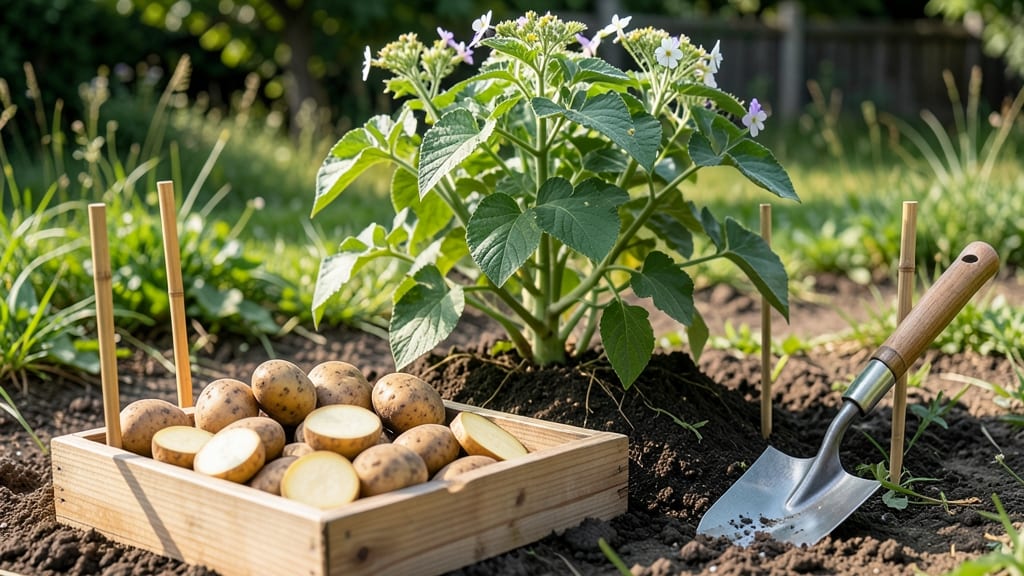
If you're asking "when should I plant potatoes in Michigan", timing is the key to avoiding frost damage and ensuring a bountiful harvest.
Michigan's unpredictable spring weather means planting too early can leave your 🥔 vulnerable to cold soil and late frosts, while waiting too long might shrink your growing season.
For most Michigan gardeners, the ideal window opens when soil temperatures consistently reach 45°F—typically between mid-April and early May in the southern half of the state, and a bit later in the Upper Peninsula.
But don't just guess: soil temperature is more critical than calendar dates, especially in years with early snowmelt or delayed warming.
I'll break down exactly how to adjust your planting schedule based on your region, whether you're growing early-maturing varieties or late-season spuds. You'll also learn how to spot the signs of premature planting—like yellowing sprouts—and how to fix common mistakes before they derail your crop.
By the end, you'll know not just when to plant, but also how to maximize your potatoes' potential from seed to harvest. Let's get those spuds in the ground at the perfect moment!
Michigan potato planting dates by region (2024 frost data)
Michigan’s diverse climate means your potato planting window varies dramatically from the Upper Peninsula to Southern Michigan. I’ve analyzed 2024 frost data and USDA zones to give you precise planting dates for three key regions, ensuring you avoid frost damage while maximizing your harvest.
For Southern Michigan (Zones 6a-6b), where last frosts typically occur April 15-25, aim to plant 2-3 weeks after that date. In Northern Lower Peninsula (Zones 5b-6a), wait until May 1-10 due to later frosts.
The Upper Peninsula (Zones 4b-5a) demands patience—plant no earlier than May 15-25 to protect tender sprouts.
🌱 Pro Tip: Use black plastic mulch to warm soil faster in cold regions, extending your planting window by 1-2 weeks. This hack is especially valuable for early-maturing varieties like 'Yukon Gold' or 'Red Pontiac'.
| Region | USDA Zone | Avg Last Frost | Ideal Planting Window | Harvest Ready By |
|---|---|---|---|---|
| Southern Michigan | 6a-6b | April 15-25 | May 1-15 | July 15-Aug 10 |
| Northern Lower Peninsula | 5b-6a | April 25-May 5 | May 10-25 | July 20-Aug 15 |
| Upper Peninsula | 4b-5a | May 10-20 | May 25-June 5 | Aug 1-15 |
🌡️ Note: Adjust dates 1 week earlier if using black plastic mulch or row covers.
Soil temperature is just as critical as frost dates. Potatoes thrive when soil reaches 45°F (7°C), but roots struggle below 40°F (4°C). Use a soil thermometer to test—plant only when temps are consistently warm.
In Northern Michigan, this often means waiting until late May even if frosts have passed.
For second crops, plant late varieties like 'Kennebec' or 'Russet' in early June (Southern MI) or mid-June (Northern UP). These will mature just before first frosts in September-October, giving you a fall harvest when storage potatoes are at their peak.
💡 Local Tip: Michigan State University Extension recommends seed chitting (pre-sprouting) for early plantings. This can shave 2-3 weeks off your growing season—critical for short-season zones. I’ll cover chitting methods in the next section!
Remember: Potatoes need 90-120 days to mature, so calculate backward from your first expected frost. For example, in Zone 5a, aim for a July 15 harvest by planting no later than June 1. Use this timeline to plan your succession plantings for continuous harvests.
If you’re unsure about your exact last frost date, check your local cooperative extension office or use the Michigan Garden Guide app for hyper-local data. These resources often provide weekly updates based on real-time weather patterns—far more accurate than generic zone maps.
How to adjust planting for early vs late varieties (with seed chitting guide)
Michigan’s short growing season means choosing the right potato varieties—and planting them at the perfect time—can make or break your harvest. Early varieties like Yukon Gold mature in just 60-75 days, while late-season Russet Burbank need 90-110 days.
Timing these correctly lets you stretch your harvest from July to October.
For early varieties, aim to plant 2-3 weeks before your last frost date (typically mid-April in Southern Michigan to early May in the Upper Peninsula). Late varieties, however, should wait until after soil warms to 45°F—usually late May to early June—to avoid stunted growth from cold soil.
Seed chitting is my secret weapon for extending Michigan’s planting window by 2-3 weeks. By sprouting your seed potatoes indoors 2-4 weeks before planting, you ensure faster emergence and stronger plants. This is especially useful for late varieties that need every extra day to mature before frost.
If you’re planting late varieties, consider a second crop in early July for a fall harvest. Just use smaller seed potatoes (golf-ball size) and plant in shallow trenches to speed up growth before frost.
Remember, soil temperature matters more than air temperature. Use a soil thermometer—potatoes won’t thrive until the soil hits 45°F consistently. In colder regions like the Upper Peninsula, wait until late May or early June even if your last frost was earlier.
For maximum yield, hill soil around stems when plants reach 6 inches tall, repeating every 2-3 weeks. This encourages more tuber formation and protects against blight—a common issue in Michigan’s humid summers.