
Companion Plants
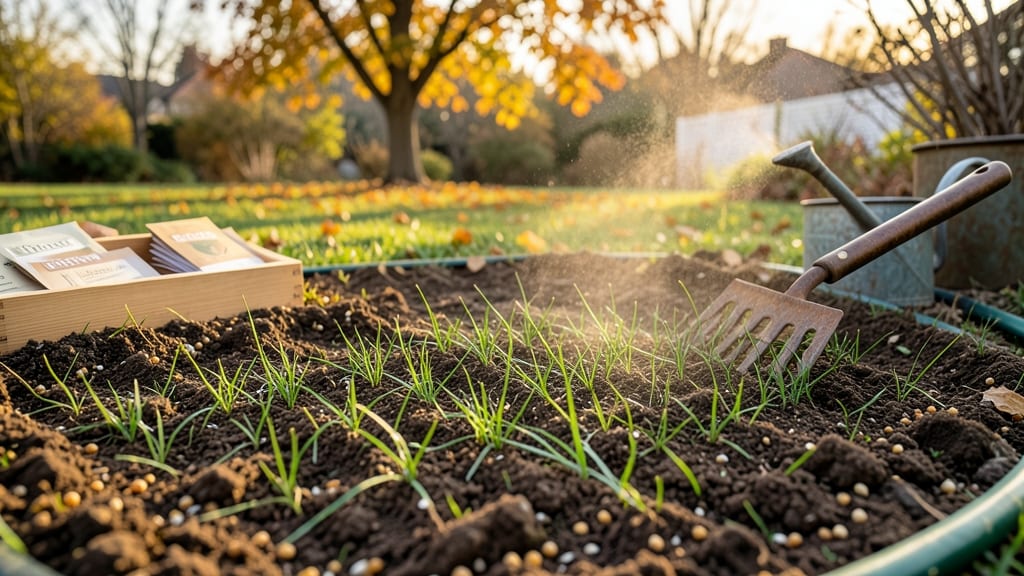
Planting grass seed in the fall is your golden ticket to a thicker, greener lawn—but timing it wrong can leave you with bare patches by spring.
The key lies in understanding your region's frost dates, soil temperatures, and the 4-6 week window before the first cold snap when roots establish deep before winter sets in.
If you're in USDA Zone 6a (like much of the Midwest), aim for late September to early October—when soil stays warm enough for germination but nights grow cooler. This balance helps grass seedling survive winter's chill while avoiding the heat stress of summer planting.
Skipping this window means risking weak growth or seedling loss when frost hits.
But here's the catch: your exact timing depends on more than just the calendar. Factors like your local first frost date, grass type (cool-season grasses like fescue thrive in fall), and even recent rainfall can shift the ideal window by weeks.
Let's break down how to pinpoint the perfect moment for your lawn's location and climate.
Whether you're a first-time seeder or a lawncare veteran, getting this right means less work next spring—and more time enjoying your yard. I'll walk you through the science, regional adjustments, and pro tips to ensure your grass takes root like it's supposed to. Ready to dig in?
USDA zone fall planting chart: best weeks to plant grass seed by region
Fall is the perfect time to plant cool-season grass seed like fescue, ryegrass, and bluegrass—when soil stays warm but air cools. The ideal window is 4-6 weeks before your region's first frost, giving seeds time to germinate and establish roots before winter dormancy.
Your USDA hardiness zone dictates the exact timing. Northern zones (3-5) have shorter windows, while southern zones (8-10) can plant later. Let’s break down the optimal planting weeks by zone to ensure your grass thrives next spring.
| USDA Zone | Best Planting Window | Soil Temp Threshold | Grass Types |
|---|---|---|---|
| Zones 3-4 | Mid-August to early September | 50–65°F | Tall fescue, perennial ryegrass |
| Zones 5-6 | Late August to mid-October | 55–70°F | Kentucky bluegrass, fine fescue |
| Zones 7-8 | September to early November | 60–75°F | Bermuda grass (warm-season), ryegrass |
| Zones 9-10 | October to December | 65–80°F | St. Augustine, zoysia (warm-season) |
For Zones 3-4, act fast—seeds need 6-8 weeks to establish roots before winter. In Zones 5-6, aim for late August to mid-October, when daytime temps hover around 70°F but nights dip below 50°F.
Southern zones (7-10) can extend planting into November, but avoid planting within 4 weeks of frost.
Pro tip: Check your local frost dates (via Almanac.com) and count backward. If your area has unpredictable frosts, err on the earlier side—grass seed won’t germinate in cold soil.
Cool-season grasses like Kentucky bluegrass and fescue thrive when planted in fall’s mild temps. These varieties grow slowly in summer heat but bounce back aggressively in spring if given a strong fall start. Warm-season grasses (like Bermuda) should be planted in late spring, not fall.
Soil temperature matters more than air temperature. Use a soil thermometer to confirm temps are above 50°F (ideal: 60–75°F). If your soil is still too hot (above 80°F), wait 2–3 weeks—seeds can bake in overheated soil.
Regional microclimates also play a role. Coastal areas (like Pacific Northwest) may have milder falls, extending the window to late October. Inland or mountainous regions (like Rocky Mountains) should plant 2 weeks earlier to avoid early frosts.
Remember: Late fall planting (after October 15 in most zones) risks weak germination before winter. But if you miss the ideal window, early spring planting (March–April) is the second-best option—just be prepared for summer heat stress.
USDA zone fall planting chart: best weeks to plant grass seed by region
Fall planting gives cool-season grasses like fescue, ryegrass, and bluegrass the ideal conditions to establish roots before winter. But the exact timing varies dramatically depending on your USDA zone—plant too early in hot zones, and your seed will bake; too late, and frost will kill tender sprouts.
Let’s break down the optimal 4-6 week window before your first frost for each region, along with soil temperature thresholds to aim for.
Most cool-season grasses need soil temps between 60°F and 75°F for germination. In northern zones (3-5), this aligns with late August to early September, while southern zones (8-10) may push planting into October or even November.
The goal is to give seedlings 4-6 weeks of growth before winter dormancy sets in.
🌱 Pro Tip: Check your local frost dates (USDA Plant Hardiness Zone Map) and count backward. For example, if your first frost is November 15, aim to plant by October 15 in Zone 6a.
| USDA Zone | Optimal Planting Window | Soil Temp. Range (°F) | Grass Types |
|---|---|---|---|
| 3-5 (Cold Climates) | Late August - Early September | 60-70°F | Tall Fescue, Perennial Ryegrass |
| 6-7 (Midwest/Northeast) | Mid-September - Early October | 65-75°F | Kentucky Bluegrass, Fine Fescue |
| 8-10 (South/Southeast) | October - Early November | 70-80°F | Bermuda Grass (warm-season), Zoysia |
If you’re in Zone 6a (like much of the Midwest), your ideal window is late September to early October. This gives seedlings time to germinate and develop roots before the ground freezes.
In warmer southern zones (8-10), you can push planting into October or even November, but avoid planting after the first frost—warm-season grasses like Bermuda or Zoysia handle fall planting differently and may need a late-summer approach instead.
💧 Watch For: Soil moisture levels. If your region experiences dry spells in fall, consider planting earlier (even if temps are slightly high) and prioritize consistent watering to prevent seed desiccation.
For northern zones (3-5), don’t wait past early September—cool nights and shorter days can slow germination. Instead, focus on soil prep (removing debris, aerating compacted soil) to create the best conditions for your seed.
The key is balancing warm soil with cool air to encourage strong root growth before winter.
✅ Ready to Plant? Once you’ve nailed your zone and timing, the next step is adjusting for your local microclimate—like shade patterns, rainfall trends, or even your yard’s elevation. We’ll cover those tweaks in the next section to fine-tune your planting strategy.