
Plants
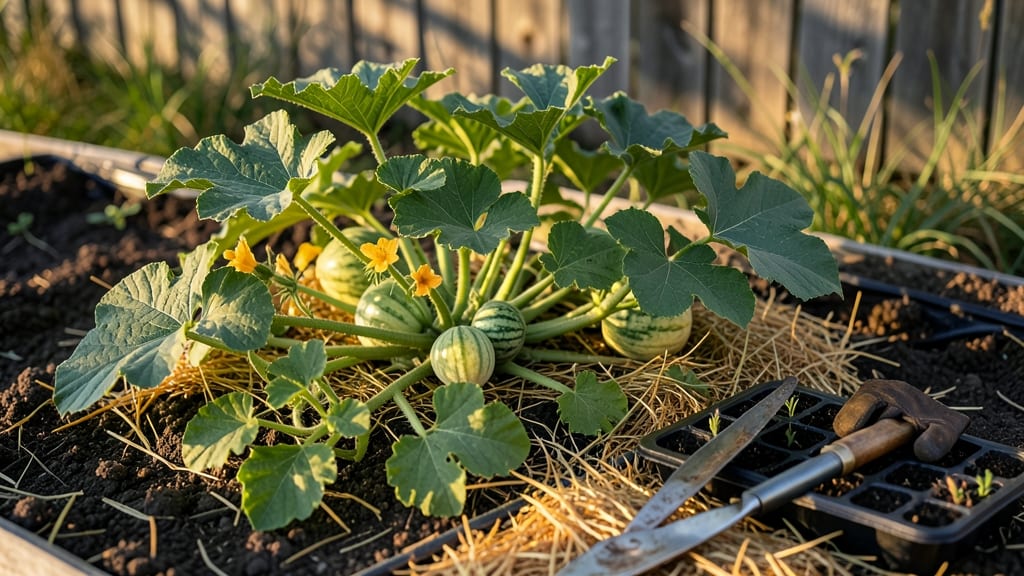
Planting watermelon in Georgia at the wrong time can turn your summer dreams of juicy slices into a sad pile of wilted vines. The key isn't just avoiding frost—it's matching your county's unique microclimate to give those 🍉 vines the perfect head start for a harvest bursting with sweetness.
Georgia's warm climate (USDA zones 7b-8b) gives you a longer growing window than many states, but even here, timing matters. Too early, and cool soil stalls germination; too late, and your melons won't mature before fall's chill sets in.
The sweet spot? Mid-April to early June after the last frost—when soil finally warms to that magic 70°F threshold.
I've seen gardeners in coastal Savannah plant weeks earlier than those in the Piedmont hills, and both end up with great harvests—because they adapted to their local conditions.
Whether you're in 7b's cooler valleys or 8b's heat islands, we'll break down exactly when to put those seeds in the ground for maximum yield.
Ready to turn your backyard into a watermelon patch? Let's dive into the county-by-county planting deadlines, soil prep secrets, and pro tips that'll have you harvesting July through September like a local farmer. Your first perfect slice is just a few weeks away!
Georgia watermelon planting deadlines by county: frost-free zones and soil warmth maps
Georgia’s diverse climate—from the humid coastal plains to the cooler mountain regions—means watermelon planting deadlines vary dramatically by county. While the average last frost date for most of Georgia falls between March 15 and April 15, soil temperature is the real game-changer.
Watermelon seeds need soil at least 70°F to germinate, and air temperatures below 55°F can stunt young plants. In lowland counties like Liberty or Camden, you might plant as early as mid-March, while mountain counties like Fannin or Murray often wait until late April or early May.
To simplify, I’ve broken down Georgia into three key zones: coastal plains, Piedmont, and mountains. Each has its own optimal planting window and soil warmth triggers.
For example, Bibb County (Piedmont) typically plants in early April, while Appling County (coastal) might start by late March. Elevation and proximity to water bodies (like Lake Lanier) also shift these timelines by 1-2 weeks.
🌱
Georgia Watermelon Planting Deadlines by Region
| Region | County Examples | Last Frost Date | Optimal Planting Window | Soil Temp Threshold |
|---|---|---|---|---|
| Coastal Plains | Camden, Liberty, Appling | March 15–March 30 | Late March–Early April | 70°F+ (sooner) |
| Piedmont | Forsyth, Cobb, Bibb | March 30–April 15 | Early–Mid April | 70°F+ (mid-April) |
| Mountains | Fannin, Murray, Towns | April 15–May 1 | Late April–Early May | 70°F+ (late April) |
*Use a soil thermometer to confirm warmth—cold soils delay germination by 1-2 weeks.
For coastal gardeners, the key is speed—plant ‘Sugar Baby’ or ‘Crimson Sweet’ by late March to harvest before summer heat peaks in July-August. In contrast, mountain counties should focus on heat-tolerant varieties like ‘Charleston Gray’ and plant no later than May 1 to avoid shortened growing seasons.
Pro tip: Check your county’s USDA Plant Hardiness Zone (Georgia ranges from 7b to 8b)—higher zones (like Bulloch County) can plant 2 weeks earlier than cooler zones (like Dawson County).
🌡️
Don’t rely solely on frost dates—soil temperature is your true guide. Even if the air is warm, cold soil can cause seeds to rot or delay sprouting. Use a soil thermometer (available at garden centers for $10–$15) to monitor depth.
Watermelon roots need consistent warmth, so avoid planting until readings hit 70°F at 2 inches deep for 3 consecutive days. In sandy soils (common in coastal areas), warmth arrives faster, while clay soils (Piedmont regions) hold cold longer.
Amend heavy soils with compost or peat moss to speed up warming.
📅
Here’s my county-specific cheat sheet for Georgia gardeners: If you’re in southwest Georgia (e.g., Thomas County), aim for April 1 planting. For north Georgia (e.g., Hall County), wait until April 15. And if you’re in middle Georgia (e.g., Macon-Bibb County), early April is ideal.
Remember, late plantings (after May 15) risk smaller fruits due to Georgia’s hot, humid summers—watermelons need 75–90 days to mature, so math your planting window to your first expected frost (usually mid-November).
☀️
One final tip:
How to adjust planting times for Georgia’s microclimates: elevation, soil type, and early varieties
Georgia’s diverse geography—from the coastal plains to the Blue Ridge Mountains—means watermelon planting times can vary by 4-6 weeks depending on your location.
If you’re in cooler, higher-elevation counties like Fannin or Murray, you’ll need to wait until late April or even early May, while lowland areas like Camden or Brantley can start as early as mid-March.
Soil type also plays a critical role. Sandy soils (common in coastal areas) warm up faster but dry out quickly, while clay-heavy soils (found in Piedmont regions) take longer to reach the 70°F threshold but retain moisture better.
I’ve seen watermelon seeds sprout in 10 days in sandy soil but struggle for weeks in cold clay—so test your soil’s warmth with a soil thermometer before planting.
For mountainous regions, opt for early-maturing varieties like ‘Sugar Baby’ (65 days) or ‘Crimson Sweet’ (80 days) to beat the shorter growing season.
In the coastal plains, you can afford longer-season types like ‘Charleston Gray’ (90 days) or ‘Jubilee’ (85 days), which thrive in the extended heat.
Planting Too Early vs. Too Late: Risk Assessment
⚠️ Planting Too Early
- Cold soil delays germination
- Seedlings prone to damping-off disease
- Weak vines struggle in late frosts
- Lower yields due to stress
✅ Planting Too Late
- Melons won’t mature before frost
- Reduced sweetness and size
- Higher risk of pests (squash bugs, cucumber beetles)
- Limited harvest window in fall
Elevation is another game-changer. For every 1,000 feet above sea level, your planting window shifts 3-5 days later. In USDA Zone 7b (e.g., Athens or Dahlonega), aim for late April, while Zone 8b (e.g., Savannah or Waycross) can start in mid-March.
I once grew watermelons in Rabun County by using black plastic mulch to warm the soil—it cut my planting time by 2 weeks!
If you’re unsure about your exact planting window, check your county’s historical frost dates (via the Georgia Climate Project) and add 2-3 weeks to ensure soil warmth.
For example, Forsyth County (Zone 7b) has a last frost date of April 15, but I wait until May 1 to plant—giving those vines a fighting chance against late cold snaps.
Pro tip: Use row covers or cold frames in early spring to jumpstart germination in cooler areas. I’ve seen gardeners in North Georgia get a 2-week head start by sowing seeds under protective covers in late March, then removing them once soil warms.
Pair this with dwarf varieties like ‘Tiny Tim’ (55 days) for guaranteed success in short seasons.