
Plants
If you've ever wondered "when can you plant potatoes in Colorado", the answer depends on where you live—and getting it wrong could mean losing your entire crop to frost or drought.
Colorado’s diverse climate means planting too early in the high-altitude Front Range risks freezing your 🥔 tubers, while waiting too long in the Western Slope might cut your harvest short.
I’ve grown potatoes here for years, and the key is matching your variety to your zone’s last frost date. Whether you’re in Denver’s Zone 5b or the warmer Zone 7a of Colorado Springs, timing is everything.
Let me break down the exact windows—and how to adjust for hail-prone skies or urban containers—to ensure you’re planting at the perfect moment for a bountiful harvest.
Most gardeners start in late March or early April, but that’s just the beginning. Early varieties like Yukon Gold can go in as soon as the soil warms to 40°F, while late-season Fingerlings need to wait until May.
I’ll show you how to read your soil’s cues and avoid common mistakes that waste your time and effort.
Ready to dig in? By the end of this guide, you’ll know exactly when to plant, how to protect your crop from Colorado’s unpredictable weather, and which varieties thrive in your specific microclimate. Let’s get those potatoes growing!
Colorado potato planting dates by hardiness Zone (5-8)
Colorado’s diverse climate—from the high-altitude Front Range to the Western Slope’s desert-like conditions—means potato planting times vary dramatically. The key is aligning your last frost date with soil temperature thresholds (ideally 45°F+) for healthy sprouts.
Most Colorado gardeners fall into USDA Zones 5-8, each with unique timing needs.
For Zone 5a/5b (e.g., Fort Collins, Steamboat Springs), your window is narrow: plant early April to mid-May for early varieties or late May to early June for late-season tubers. Zone 6a/7a (Denver, Colorado Springs) offers more flexibility, with ideal dates spanning mid-April to early June, while Zone 8a (Albuquerque, southern Colorado) can start as early as late February.
Here’s the critical rule: Wait until soil warms to 45°F—cold soil delays sprouting and invites rot. Use a soil thermometer to avoid guesswork. In high-altitude areas (e.g., 7,000+ ft), plant 2-3 weeks later than lower elevations to escape late frosts.
Pro tip: Early varieties (e.g., Red Norland) mature in 70-90 days, making them ideal for Zone 5. Late varieties (e.g., Russet Burbank) need 100+ days and suit Zones 6-8. Always check seed packets for days to maturity and adjust your planting date accordingly.
Colorado’s microclimates can shift planting dates by weeks. For example, Grand Junction (Zone 7b) might see 60°F soil in March, while Leadville (Zone 4b) waits until June. Always monitor local Almanac frost dates and supplement with a minimum thermometer to track nighttime dips below 32°F.
For container gardening in urban areas (e.g., Denver, Colorado Springs), start 4-6 weeks earlier indoors or in a greenhouse. Containers warm faster than soil, giving you a 2-week head start on ground planting. Use sterile potting mix and ensure pots have drainage holes to prevent waterlogged tubers.
If you miss the spring window, fall planting is possible in Zones 7-8 (e.g., southern Colorado). Plant late August–early September for a winter harvest before the first frost. Choose early-maturing varieties (e.g., Red Pontiac) and use row covers to extend the season by 2-3 weeks.
Remember: Potatoes need 60-120 days to mature, so calculate backward from your average first frost date. In Zone 5, that’s early July; in Zone 8, it’s mid-October. Rush planting, and you’ll sacrifice yield—or worse, blight from hot, humid late-summer conditions.
🌱 For high-altitude gardens (e.g., Boulder, Estes Park), prioritize cold-hardy varieties like Kennebec or Chieftain. These tolerate cooler soils and shorter growing seasons better than delicate fingerlings. Always chit your seed potatoes (sprout indoors in light) to jumpstart growth in Zone 5-6.
How to adjust planting dates for Colorado’s microclimates
Colorado’s microclimates can vary dramatically even within a single city. For example, Denver’s Zone 5b downtown might see last frosts in mid-April, while nearby high-altitude suburbs like Golden could face frost until early May. Understanding these shifts helps you fine-tune your potato planting schedule for success.
Urban gardeners in Colorado Springs (Zone 6a) often plant 2-3 weeks earlier than their rural counterparts in the Western Slope (Zone 7a). The key is monitoring local weather patterns—check your USDA Plant Hardiness Zone map and add 1-2 weeks to the recommended dates if you’re in a cooler pocket.
For instance, Fort Collins’ Zone 5a gardeners should wait until late April, while Pueblo’s Zone 6b can start in early April.
Here’s how I adjust my planting dates based on microclimates:
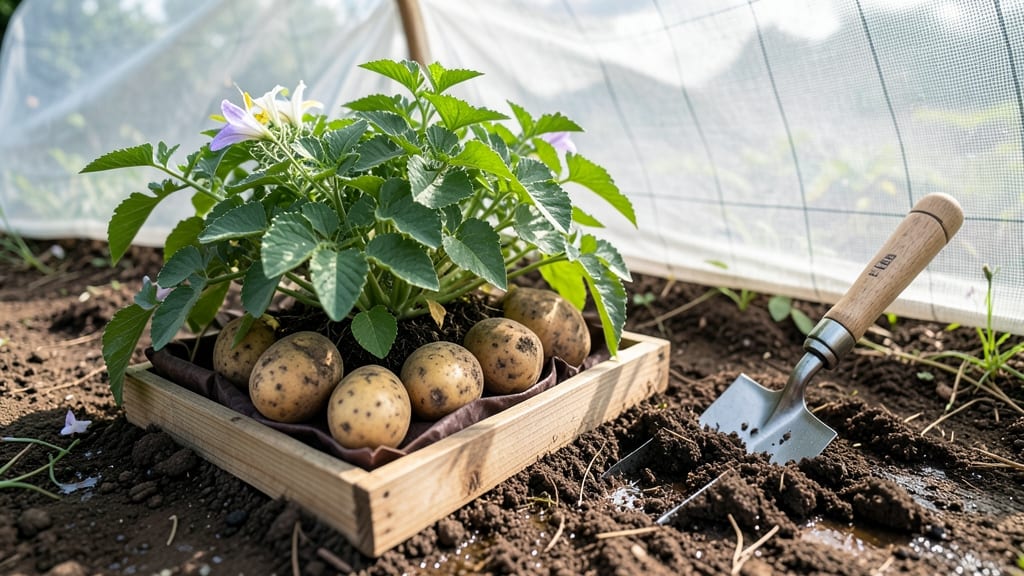
Row covers and cold frames are my go-to tools for extending Colorado’s short growing season. For example, I use floating row covers to plant Yukon Gold potatoes in early April in Denver, even if frost is still a risk.
These covers raise soil temperatures by 5-8°F and protect against late frosts. Remove them once flowers appear to prevent overheating.
If you’re in a dry microclimate like the Western Slope, focus on moisture retention. I’ve had the best luck with drip irrigation on a timer to keep soil consistently damp.
For high-altitude gardens, prioritize early-maturing varieties like Red LaSoda (60 days) to avoid frost before harvest. Always test your soil’s drainage—potatoes rot in soggy conditions, even in cooler zones.
Pro tip: Keep a gardening journal to track your local microclimate’s quirks. Note when frost hits, how long soil stays cold, and which varieties thrive. Over time, you’ll refine your planting dates to perfection—just like I’ve done after years of trials in my Denver backyard. 🌱