
Flowers
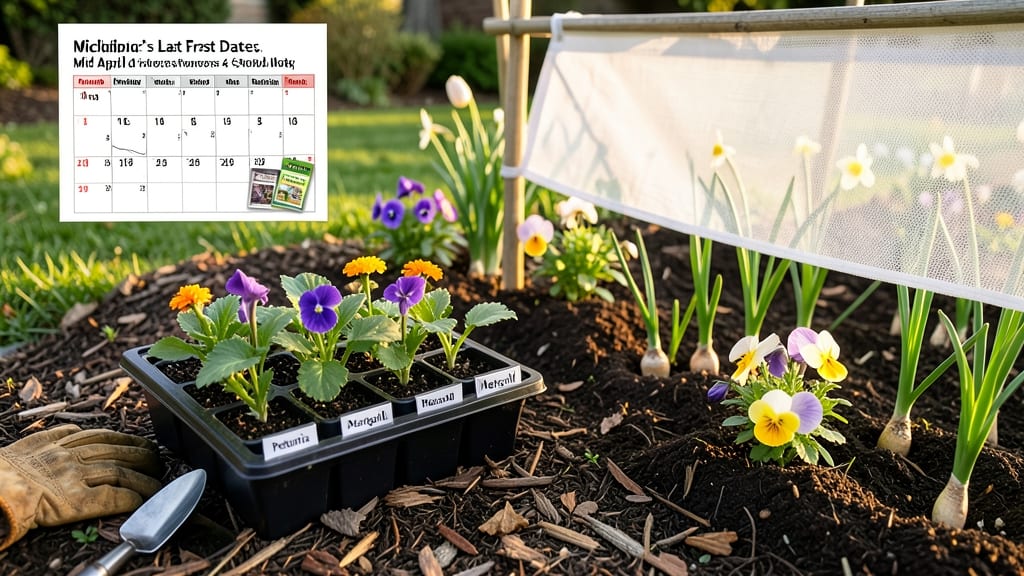
Timing your flower planting in Michigan’s USDA Zones 5-6 can feel like a high-stakes guessing game—one wrong move, and your 🌸 blooms might never take off.
But here’s the secret: knowing the last frost date (usually mid-April in the south, early May in the north) unlocks the perfect window for vibrant gardens all season.
Whether you’re dreaming of summer annuals or hardy perennials that return year after year, Michigan’s climate demands precision. Plant too early, and frost will nip your seedlings. Wait too long, and you’ll miss the ideal 60-day growth window before summer heat sets in.
In this guide, I’ll break down the exact months to plant—from cool-season favorites like pansies to heat-loving zinnias—and how to adjust for Michigan’s microclimates. No more second-guessing, just confident planting that guarantees blooms from spring to fall.
Ready to transform your garden? Let’s dive into the step-by-step timing that’ll have your flowers thriving, no matter where in Michigan you’re gardening.
Michigan flower planting timeline by USDA Zone 5 & 6
Michigan’s USDA Zones 5 and 6 create a unique gardening challenge, where last frost dates can vary by weeks between southern and northern regions. Most of the state experiences its final spring frost between mid-April and early May, while the first fall frost typically arrives in mid-October.
To succeed, I’ve mapped out the ideal planting windows for annuals, perennials, and bulbs based on Michigan’s climate patterns.
Start by checking your local last frost date—this is your golden rule. In southern Michigan (Zone 6), you can often plant hardy annuals like pansies and snapdragons as early as late March.
Meanwhile, gardeners in the Upper Peninsula (Zone 5) should wait until mid-May for most flowers to avoid frost damage. Understanding these variations helps you avoid common mistakes like planting frost-sensitive flowers too early.
🌱 Michigan Flower Planting Timeline
| Season | Plant Type | Best Planting Time | Notes |
|---|---|---|---|
| Early Spring | Bulbs (Tulips, Daffodils) | September-October (fall) or March (spring) | Plant bulbs 6-8 weeks before frost for spring blooms. |
| Late Spring | Hardy Annuals (Pansies, Snapdragons) | Late March-April (Zone 6) or May (Zone 5) | Can tolerate light frost; plant after soil thaws. |
| Mid-Spring | Perennials (Coneflowers, Black-Eyed Susans) | April-May (after last frost) | Divide perennials in early spring for best results. |
| Late Spring-Summer | Heat-Loving Annuals (Marigolds, Zinnias) | May-June (after soil warms to 50°F) | Wait until nighttime temps stay above 50°F. |
| Fall | Fall-Blooming Bulbs (Chrysanthemums, Asters) | August-September | Plant 6-8 weeks before first frost for fall color. |
For annual flowers, timing is everything. Cold-hardy varieties like pansies and sweet peas can handle light frosts and should be planted as soon as the soil is workable in spring.
Meanwhile, tender annuals such as petunias and geraniums need to wait until all danger of frost has passed, usually around mid-May in most of Michigan. I always test soil temperature with a soil thermometer—aim for at least 50°F before planting heat-lovers like zinnias.
Perennials offer more flexibility since they return yearly. I recommend planting bare-root perennials in early spring (March-April) or container-grown perennials after the last frost. For example, coneflowers and black-eyed Susans thrive when planted in well-draining soil and full sun.
If you’re dividing perennials, do it in early spring before new growth begins to minimize stress on the plants.
Don’t overlook fall planting—it’s a great strategy for extending your blooms. Asters, chrysanthemums, and fall-blooming bulbs planted in August or September will reward you with vibrant color as summer fades.
Just be sure to plant them 6-8 weeks before your expected first frost to give roots time to establish before winter sets in.
One of my biggest lessons? Microclimates matter. A garden near Lake Michigan might experience cooler temperatures due to lake breezes, while an urban area could be 5-10°F warmer than surrounding rural zones. Always observe your specific location’s patterns—your neighbor’s frost date might not match yours!
Using row covers or cold frames can also extend your planting season by 2-4 weeks in early spring or late fall.
Finally, keep a gardening journal to track your local frost dates and planting successes. Over time, you’ll refine your timing to match your unique corner of Michigan. The key is patience—rushing too early can lead to frost damage, while waiting too long might miss peak bloom times.
With the right timing, your garden will burst with color from spring through fall.
How to adjust flower planting dates for Michigan’s microclimates
Michigan’s diverse geography—from the Great Lakes’ cooling effects to urban heat islands in Detroit—means your last frost date could vary by 2-3 weeks just miles away. For example, Traverse City might see frost until May 15, while Ann Arbor could be frost-free by April 25.
These microclimates aren’t just regional quirks; they can mean the difference between thriving zinnias and wilted petunias.
To fine-tune your planting schedule, start by checking your local Almanac frost dates and adjust by 1-2 weeks earlier if you’re near water (like Lake Michigan) or 1-2 weeks later in sheltered valleys.
Even a south-facing slope can warm up 2-3°F faster than a north-facing yard, giving you an earlier start for heat-loving annuals like geraniums.
Here’s how to account for these variations in your garden plan:
- 🌊 Water Bodies: Areas near lakes or rivers stay 5-10°F cooler in spring. Delay planting frost-sensitive flowers (like impatiens) by 10-14 days compared to inland sites.
- 🏙️ Urban Heat Islands: Cities like Detroit or Grand Rapids can be 3-5°F warmer than rural areas. Plant heat-loving annuals (like marigolds) 2 weeks earlier in these zones.
- 🏔️ Elevation Changes: For every 1,000 ft gain in elevation (common in the Upper Peninsula), expect 3-5°F cooler temps. Adjust planting dates 1-2 weeks later for highland gardens.
- 🌿 Sheltered Spots: South-facing walls, fences, or dense shrubs create microclimates 2-3°F warmer. Use these spots to start tender perennials (like lavender) 10-14 days earlier.
- 🌬️ Wind Exposure: Open fields or hilltops dry out faster. Plant drought-tolerant flowers (like yarrow) 2 weeks earlier and mulch heavily to retain moisture.
If you’re unsure about your local conditions, try the “watchful waiting” method: plant cold-hardy annuals (like snapdragons) a week early in protected spots, then add heat-loving varieties (like cosmos) once nighttime temps stay above 50°F for 5+ days.
This two-phase approach minimizes risk while maximizing your blooming season.
For gardeners in Zone 5b (northern Michigan), consider using row covers or cold frames to extend your planting window by 3-4 weeks. These tools let you sow peony seeds or foxglove as early as late March—well before the official last frost. Just
Finally, keep a planting journal for at least 2 years to track your local microclimate’s impact. Note when frost hits unexpectedly or when heat waves stall growth. Over time, you’ll develop a customized schedule that beats Michigan’s unpredictable weather—every time.