
Companion Plants
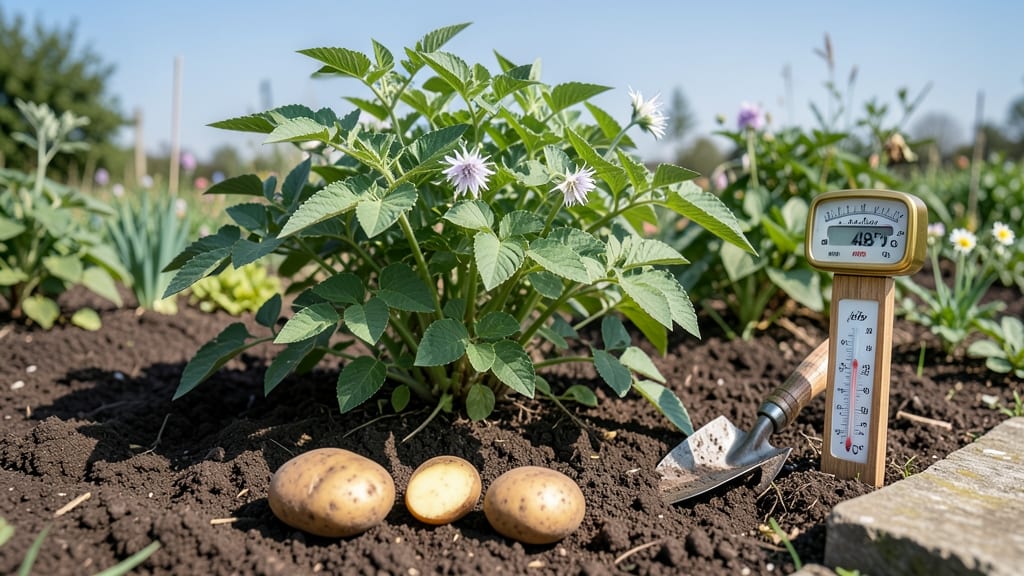
Exact weeks before last frost for planting potatoes in Zone 5
In Zone 5, potatoes thrive when planted at the right time—typically 4-6 weeks before your average last frost date. For most of Zone 5, this means mid-March to early April for early varieties, or late April to early May for mid-to-late season types.
The key is balancing soil temperature (ideally 45-50°F) with frost risk, since potatoes won't sprout in cold, wet soil.
Your exact planting window depends on whether you're in Zone 5a (colder) or 5b (warmer). In 5a, aim for late April to early May to avoid late frosts. In 5b, you can start as early as mid-March under row covers or in a greenhouse.
Always check your local USDA frost calendar—planting too early risks frost damage, while waiting too long shortens the growing season.
For container-grown potatoes, you can extend your window slightly by planting 2-4 weeks earlier in pots, since containers warm up faster. Just ensure your pots are at least 12 inches deep and have drainage holes.
My favorite early-season variety for containers is 'Red Norland', which matures in just 90 days—perfect for short Zone 5 summers.
🌱 Zone 5 Potato Planting Timeline
| Stage | Action | Notes |
|---|---|---|
| 4-6 Weeks Before Last Frost | Chit seed potatoes | Place in bright light to sprout eyes |
| 2-3 Weeks Before Last Frost | Prep soil (loosen, add compost) | Aim for pH 5.0-6.5 |
| After Last Frost (Soil 45°F+) | Plant seed potatoes 4" deep | Space 12" apart in rows 30" apart |
| 6-8 Weeks After Planting | Hill soil around stems | Prevents greening, encourages tubers |
| 90-120 Days After Planting | Harvest when foliage yellows | Early varieties first, late last |
Pro tip: Use row covers or black plastic mulch to warm the soil faster in early spring.
I’ve found that covering my beds with plastic 2 weeks before planting raises soil temps by 5-10°F, letting me plant 'Early Red Skins' as early as late March in my Zone 5b garden. Just remove the plastic once sprouts appear to avoid overheating.
If you miss the ideal window, don’t panic—you can still plant late-season varieties like 'Russet Burbank' in early June for a fall harvest. These need 100-120 days to mature, so time it so tubers finish before the first frost.
My June-planted Russets always yield smaller but still delicious potatoes by early October.
For succession planting, stagger your plantings every 2-3 weeks up to mid-June. This ensures a steady harvest instead of one big haul. I plant 'Yukon Gold' first in April, then 'Kennebec' in May, and finally 'Purple Viking' in June.
This way, I get potatoes from July through September—no gaps!
One common mistake is waiting until the soil is too warm (above 70°F). This causes potatoes to sprout too quickly and produce small, misshapen tubers. To avoid this, always check soil temperature with a soil thermometer—aim for 50-60°F at planting time.
In my garden, I’ve seen 30% larger yields when I planted at the optimal temperature versus waiting for "perfect" weather.
Remember: Early planting = earlier harvest, but only if the soil is workable. If it’s muddy or frozen, wait—potatoes won’t thrive. My rule of thumb? If you can crush a handful of soil and it holds its shape, it’s ready.
If it crumbles, it’s too dry; if it sticks together, it’s too wet.
For raised beds, you can plant 2 weeks earlier than in-ground gardens because raised beds warm up faster. Just add 3-4 inches of compost to the mix before planting—potatoes love nutrient-rich soil.
I’ve had great success with 'Fingerling' varieties in raised beds, as their small size fits perfectly in the confined space.
How to adjust planting time for early vs late potato varieties
Not all potatoes are created equal—and neither are their planting schedules. In Zone 5, choosing the right time to plant depends on whether you’re growing early varieties (like 'Yukon Gold') or late varieties (like 'Russet Burbank').
Early potatoes mature in just 60-90 days, while late varieties need 100-120 days to reach harvest. Planting them at the wrong time can mean missing the window entirely or ending up with small, underdeveloped tubers.
For early varieties, you can start planting as early as March, even if the ground is still cold. These potatoes thrive in cooler soil and can tolerate light frosts, making them perfect for succession planting or early harvests.
Late varieties, however, need warmer soil temperatures (at least 45°F) and should wait until mid-April to early May to avoid stunted growth or disease.
Here’s the key: Soil temperature is your best friend when deciding when to plant. Use a soil thermometer to check—if it’s consistently above 45°F for early varieties or 50°F for late varieties, it’s time to get those seed potatoes in the ground.
Ignoring this can lead to slow germination or even rot, especially in cold, wet soils.
| Variety Type | Days to Maturity | Ideal Planting Window | Soil Temp Requirement | Zone 5 Risk |
|---|---|---|---|---|
| Early (e.g., 'Yukon Gold') | 60-90 days | March-April (4-6 weeks before last frost) | 45°F+ | Late frost damage if planted too late |
| Mid-Season (e.g., 'Kennebec') | 90-110 days | April-May (after last frost) | 50°F+ | Blight risk if planted too late |
| Late (e.g., 'Russet Burbank') | 100-120 days | Late April-May (after soil warms) | 55°F+ | Underdeveloped tubers if planted too early |
If you’re growing multiple varieties, stagger your planting schedule. Start with early potatoes in March, then follow up with mid-season varieties in early April, and finally plant late varieties in late April or early May.
This succession planting strategy ensures a continuous harvest from July through September, giving you fresh potatoes all summer long.
Pro tip: Chit your seed potatoes (sprout them indoors) before planting to give them a head start. Place them in a bright, cool spot for 2-4 weeks before the ideal planting window—this jumpstarts growth and helps them establish faster in the cooler Zone 5 spring.
Just avoid letting them get too leggy or green before planting!
One mistake I see often is planting late varieties too early because the ground looks dry. Don’t fall for it! Cold soil delays germination and invites disease. Wait for that 55°F threshold—your patience will pay off with bigger, healthier tubers.
And if you’re in northern Zone 5 (like Minnesota or upstate New York), aim for late April planting to avoid late frosts.