
How To
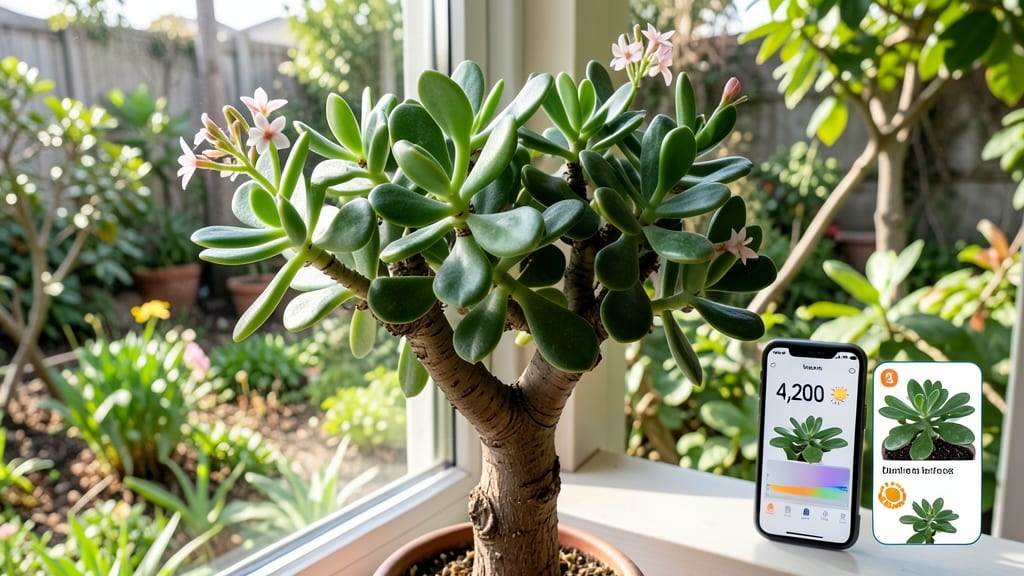
If your Jade Plant 🌿 is looking sad—leggy, yellowing, or just refusing to grow—you might be getting its light needs all wrong. The truth is, these succulents are sun worshippers, and how much light a jade plant needs makes all the difference between a thriving beauty and a struggling survivor.
Most people assume bright light means harsh midday sun, but Jade Plants are smarter than that. They crave 4-6 hours of bright, indirect sunlight daily, which means east or west-facing windows are ideal—think morning sun or golden afternoon light, not the scorching glare of a south-facing window.
This balance keeps their leaves thick, vibrant, and free from sunburn.
Here’s the game-changer: Jade Plants in low light stretch toward any available rays, creating those unsightly, weak stems. Too much direct sun, though, and you’ll see crispy edges or bleached spots. The key is finding that sweet spot where your plant gets enough light to thrive without frying.
In this guide, I’ll show you exactly how to spot the signs of light stress, adjust your plant’s environment, and keep your Jade Plant looking like the healthy, happy succulent it’s meant to be. Let’s fix this together—your plant’s future depends on it!
 Best Window Placement
Optimal light requirements for jade plants: bright sun vs. indirect light
Jade plants (Crassula ovata) are native to South Africa’s arid regions, where they thrive under bright, indirect sunlight. Unlike many houseplants, they crave 4-6 hours of light daily—but not the harsh midday glare that can scorch their leaves.
Think of it like a sunbathing session with sunscreen: plenty of exposure, but protected from the peak rays.
The key is mimicking their natural habitat. In the wild, jade plants grow under partial shade from other vegetation, which filters the sun’s intensity. This means your indoor jade plant should get morning sun or filtered afternoon light.
A south-facing window can work, but only if the plant is placed a few feet back to avoid direct sun between 10 AM and 4 PM.
Here’s the science behind it: Jade plants are succulents, meaning they store water in their leaves. Their photosynthesis process is most efficient in moderate to bright light, which helps them produce the energy needed for thick, vibrant leaves.
Too little light, and they’ll stretch toward the nearest source—a condition called etiolation. Too much, and their leaves turn yellow or crispy from sunburn.
Now, let’s talk seasons. During spring and summer, jade plants can handle more direct sunlight, especially in the morning. In fall and winter, when daylight is shorter, they’ll tolerate lower light conditions, but avoid dim corners entirely.
Even in winter, aim for at least 3-4 hours of bright light daily to keep them healthy.
| Season | Ideal Light Conditions | Signs of Stress |
|---|---|---|
| Spring | 4-6 hours of bright indirect light; tolerate morning sun | Leaves stretch (etiolation) if too little light; crispy edges if too much direct sun |
| Summer | 4-6 hours of bright indirect light; avoid midday sun | Yellow patches (sunburn) if exposed to harsh afternoon sun |
| Fall | 3-4 hours of bright light; can tolerate lower light | Slow growth or pale leaves if light is insufficient |
| Winter | 3-4 hours of bright indirect light; supplement with grow lights if needed | Leggy growth (stretching) if light is too dim |
One common misconception is that jade plants can thrive in any light condition. While they’re more forgiving than other succulents, they won’t flourish in low-light environments.
A north-facing window or a dim corner will leave your jade plant weak and stretched, with leaves that are thinner and less vibrant. On the flip side, placing them in direct midday sun without acclimation can cause irreversible damage to their leaves.
To test if your jade plant is getting the right amount of light, observe its leaves over a few weeks. Healthy jade leaves are thick, glossy, and a rich green. If you notice pale or yellowing leaves, it’s a sign of too much light.
If the leaves are thin, stretched, or reddish, it’s time to move your plant to a brighter spot. Remember, jade plants are adaptable, but they won’t thrive outside their ideal light range.
For outdoor jade plants, the rules are similar but with a few adjustments. If you’re growing your jade plant in a container on a patio or balcony, place it where it gets morning sun and afternoon shade.
If you’re planting it in the ground, choose a spot with dappled shade, like under a tree with sparse branches. Avoid full sun, especially in hot climates, as the soil can overheat and damage the roots.
Pro tip: Rotate your jade plant every 2-4 weeks to ensure even growth. Since plants lean toward their light source, rotating them helps maintain a balanced, bushy shape and prevents them from becoming lopsided. This is especially important for indoor plants, where light sources are often one-sided.
Finally, if you’re unsure whether your space is too bright or too dim, use a simple shadow test. Hold your hand near the plant—if your shadow is sharper than the plant’s shadow, it’s getting too much direct light.
If the plant’s shadow is darker and fuzzier than your hand’s shadow, it’s likely getting enough indirect light. Adjust accordingly, and you’ll see your jade plant thrive in no time! 🌿
How to adjust light for jade plants in different environments
Adjusting light for your jade plant depends entirely on where it lives—indoors, outdoors, or in a mixed environment. Since these succulents crave bright light but can’t handle intense afternoon sun, you’ll need to get creative with placement and tools. Let’s break down how to optimize light for your specific setup.
For indoor jade plants, the best spots are east- or west-facing windows, where morning or late afternoon sun is gentler. If you only have a south-facing window, place your plant a few feet back to avoid leaf scorch.
Rotate the pot quarter-turns every 2 weeks to ensure even growth and prevent lopsided stems.
Outdoor jade plants thrive in partial shade during summer months, especially in hot climates. Use a 50% shade cloth if your plant shows signs of stress like crispy edges or sunburned leaves. In cooler seasons, you can move them to a sunnier spot to boost growth before winter dormancy.
⚠️ Warning: Avoid These Light Mistakes
- North-facing windows provide too little light—supplement with a grow light (12-14 hours/day) to prevent etiolation (stretched, weak growth).
- Direct midday sun (10 AM–4 PM) can scorch leaves—move plants away or use sheer curtains to diffuse light.
- Skipping rotation leads to uneven growth—turn pots weekly for balanced exposure.
If your home lacks natural light, LED grow lights are a game-changer for jade plants. Place the light 6–12 inches above the plant and use it for 12–14 hours daily to mimic sunlight.
Full-spectrum bulbs (like 6500K) replicate natural light best, but even cool white LEDs work in a pinch.
For outdoor containers, choose a spot with dappled shade (like under a tree with sparse branches) or a protected patio where the plant gets morning sun and afternoon shade.
In USDA Zone 9+, jade plants can handle full sun with afternoon shade, but always monitor for stress signs.
Pro tip: Use a light meter app (like Light Meter for iOS) to check lux levels—jade plants thrive at 10,000–20,000 lux. If readings are below 5,000 lux, supplement with artificial light immediately to prevent decline.
Remember, adjustments are key. If your jade plant’s leaves start turning yellow or red, it’s begging for more light. If they stretch and pale, it’s crying out for shade. Trust your plant’s signals and tweak its environment accordingly!