
Plants
If you’ve ever dreamed of waking up to a vibrant Oklahoma spring bursting with 🌼 daffodils, knowing when to plant daffodil bulbs in Oklahoma is the secret weapon you can’t afford to miss.
Planting your daffodil bulbs too early risks frost damage, while waiting too long might leave you scrambling before winter sets in. The good news? Oklahoma’s unique climate—especially in zones 6b-7a—offers a clear window to get it right.
Most gardeners in Oklahoma know the fall is the golden window for planting daffodils, but the exact months can feel like a moving target. Whether you’re in Oklahoma City, Tulsa, or rural areas, the 6-8 weeks before the ground freezes is your sweet spot.
That means starting as early as September or as late as November, depending on your microclimate.
Why does this matter? Because daffodils need time to establish roots before winter hits, but they also hate soggy soil. We’ll break down the best months for your specific area, how to prep your soil for Oklahoma’s tricky clay, and even which varieties thrive best in our unpredictable weather.
Let’s make sure your 🌼 daffodils don’t just survive the winter—they bloom like crazy next spring.
Ready to transform your garden into a springtime showstopper? You’ll learn the exact steps to plant, protect, and nurture your bulbs so they’re ready to greet March with cheerful, reliable blooms. No more guesswork—just a foolproof plan tailored to Oklahoma’s climate.
Best months to plant daffodil bulbs in Oklahoma by climate zone
Oklahoma’s diverse climate—spanning USDA Zones 6b to 7a—means the perfect time to plant daffodil bulbs varies by region. In Northern Oklahoma (like Woodward or Enid), aim for early September to avoid early frosts, while Southern Oklahoma (like Tulsa or Oklahoma City) can plant until mid-November.
The key is planting 6-8 weeks before the first frost, which typically hits mid-November in most areas.
For Oklahoma City and Tulsa, the ideal window is late September through early October. This gives bulbs time to root before winter while avoiding the heat stress of August or late-season frost risks.
Rural areas with cooler microclimates (like the Ozark Mountains) may need to plant earlier in September to compensate for colder soils.
Pro tip: Check your local Almanac frost dates—Oklahoma’s first frost can range from November 1-15, depending on elevation. Planting too late risks bulbs rotting in cold, wet soil, while planting too early may cause premature sprouting before winter dormancy.
🌼 Oklahoma Daffodil Planting Timeline
| Climate Zone | Best Planting Window | Key Considerations |
|---|---|---|
| Northern OK (Zone 6b) | Early September - Mid-October | Cooler soils; plant early to avoid frost |
| Central OK (Zone 7a) | Late September - Early November | Warmer soils; extend window to late fall |
| Southern OK (Zone 7b) | October - Mid-November | Later frosts; plant closer to November |
| Rural/Mountainous | Early September - Late October | Colder microclimates; adjust for local frost |
📅 Note: Use a soil thermometer—ideal planting soil temps are 50-60°F.
If you miss the fall window, December planting is possible in Southern Oklahoma, but bulbs may not establish roots as strongly. For spring planting (not recommended), you’d need to use a cooling chamber to trick bulbs into dormancy—this is risky for beginners.
Instead, mark your calendar for next September and buy bulbs early for the best selection.
For container gardening, the same timing rules apply, but ensure pots have drainage holes and use a lightweight potting mix. Containers warm up faster, so plant 1-2 weeks earlier than in-ground to match soil temps. Use black pots to absorb heat if extending your window in cooler zones.
Watch for early October rains, which can delay planting. If soil is waterlogged, wait until it dries enough to work—daffodil bulbs rot in soggy conditions. A simple soil moisture test (squeeze a handful—if it crumbles, it’s ready) saves you from planting too soon.
Pro gardeners in Oklahoma swear by planting after Labor Day (early September) to balance heat and frost risks. This gives bulbs 8-10 weeks to root before winter, ensuring stronger stems and bigger blooms next spring. Mark your calendar: September 1-15 is the sweet spot for most of the state.
Don’t forget to adjust for elevation—higher areas (like the Wichita Mountains) may need to plant 2 weeks earlier than lowland cities. Check local cooperative extension offices for hyper-local advice, or use a frost date calculator like the Old Farmer’s Almanac for precise timing.
How to prepare daffodil bulbs for Oklahoma’s soil and weather challenges
Oklahoma’s clay-heavy soil and unpredictable fall freezes can make planting daffodil bulbs tricky. The key is preparing your soil and protecting bulbs so they survive winter and bloom beautifully in spring. Start by testing your soil’s drainage—daffodils hate soggy roots, which can rot bulbs before they even sprout.
Most Oklahoma gardens have heavy clay soil, which compact easily and doesn’t drain well. To fix this, mix in organic matter like compost or aged manure to improve aeration.
Aim for a 6-inch layer of amended soil at planting depth. This helps water drain faster and prevents bulbs from sitting in cold, wet soil during winter.
⚠️ Warning: Avoid Planting Too Early
Planting daffodil bulbs too early in August can lead to premature sprouting before the ground freezes. Young shoots are frost-sensitive and will die back, weakening the bulb. Wait until mid-September in most of Oklahoma to ensure bulbs establish roots before winter.
Next, choose a sunny planting spot with at least 6 hours of sunlight daily. Daffodils thrive in full sun, which helps them build energy for next year’s blooms. If your yard has partial shade, plant bulbs in the sunnier areas of the bed for best results.
Before planting, soak daffodil bulbs in lukewarm water for 2-3 hours to encourage root growth. This step is especially helpful in Oklahoma’s dry fall weather, where bulbs might struggle to absorb moisture from the soil immediately.
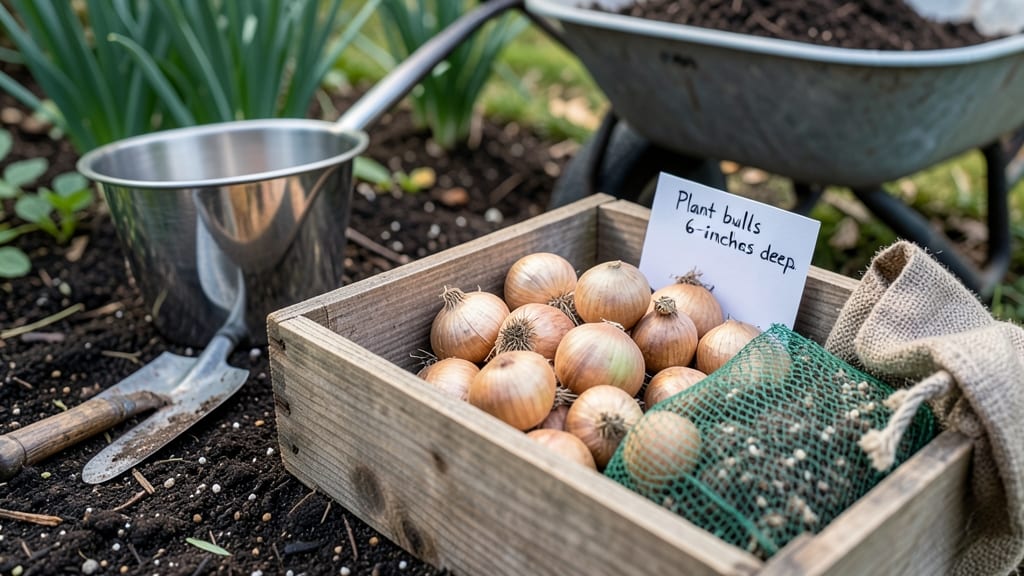
After soaking, plant bulbs 6-8 inches deep and 4-6 inches apart to give them room to grow.
To protect bulbs from late fall freezes, apply a 2-3 inch layer of mulch after planting. Use straw or shredded leaves—avoid thick layers of grass clippings, which can compact and suffocate bulbs.
Mulch insulates the soil, keeping roots 5-10°F warmer during cold snaps, which is crucial for Oklahoma’s Zone 6b-7a winters.
Finally, mark your planting spots with biodegradable flags so you don’t accidentally dig up bulbs in early spring. Daffodils need 6-8 weeks of cold dormancy to bloom, so avoid disturbing them until late February or March, when new shoots appear.