
Vegetables
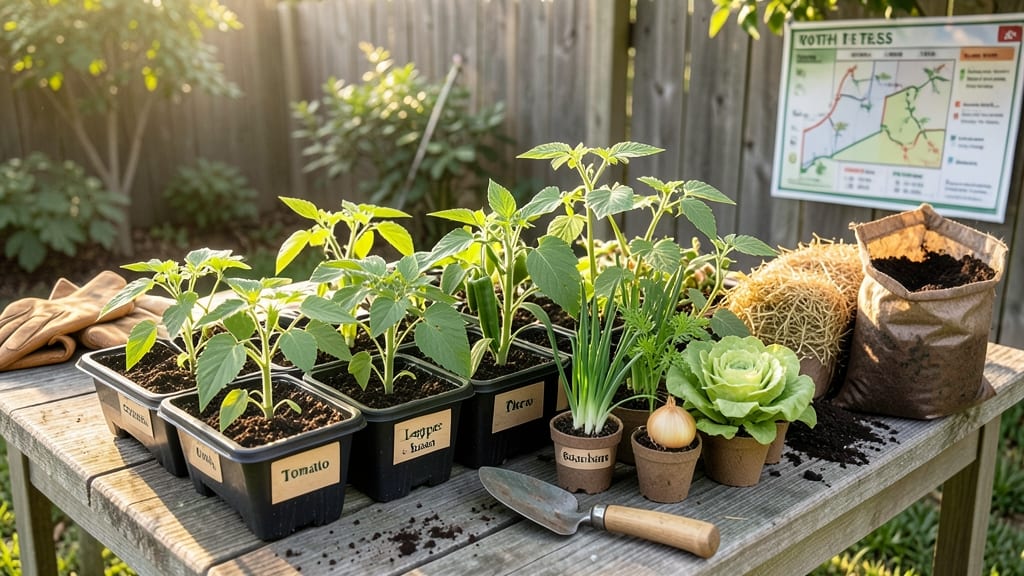
If you’ve ever wondered when is the best time to plant vegetables in Texas, only to watch your 🥕 wilt under the brutal sun or bolt before they’re ready, you’re not alone.
The difference between a thriving garden and a failed harvest often comes down to one thing: timing. Plant too early, and frost or heat zaps your crops. Plant too late, and you miss the sweet spot for maximum yield.
Texas’s 8a-10b climate zones throw a curveball—what works in North Texas (like cool-season greens in February) flops in South Texas, where warm-season crops like peppers can go in year-round. The key? Aligning your planting with microclimates and heat-resistant varieties to beat the heat before it beats you.
In this guide, I’ll break down the exact weeks to plant everything from tomatoes to okra, tailored to your region. You’ll learn how to outsmart Texas’s unpredictable weather, avoid common mistakes, and keep your garden producing long after most gardeners have given up.
Ready to turn your garden into a heat-proof harvest machine? Let’s get started.
Texas planting zones explained: how microclimates dictate your vegetable calendar
Texas isn’t just one giant garden—it’s a patchwork of 11 distinct planting zones (A through F) with wildly different climates. From the freeze-prone Panhandle to the tropical-like Rio Grande Valley, your vegetable planting schedule should align with your zone’s last frost date and heat tolerance.
Ignoring these microclimates can mean bolting lettuce in March or wilting tomatoes by July.
For example, North Texas (Zone B) has an average last frost around February 15, while South Texas (Zone F) rarely sees frost at all. This means cool-season crops like broccoli and peas go in October–November in the north but can be planted year-round in the south.
Even within a zone, urban heat islands (like Dallas) can push planting dates 2–3 weeks earlier than rural areas.
Here’s how to decode your zone’s ideal planting windows—and why timing matters more in Texas than almost anywhere else.
| Zone | Last Frost Date | First Frost Date | Cool-Season Planting | Warm-Season Planting |
|---|---|---|---|---|
| A (North) | Feb 15 | Dec 1 | Oct–Nov, Feb–March | April–May, Aug–Sept |
| B (Central) | Feb 1 | Nov 15 | Sept–Oct, Feb–March | March–April, July–Aug |
| C (East) | Jan 31 | Nov 1 | Sept–Oct, Jan–Feb | Feb–March, June–July |
| D (South) | Jan 15 | Oct 31 | Sept–Oct, Jan–Feb | Feb–March, May–June |
| E (West) | Feb 1 | Nov 15 | Sept–Oct, Feb–March | March–April, July–Aug |
| F (South) | None | None | Year-round (shade) | Feb–Nov (full sun) |
*Dates are averages; check Texas A&M AgriLife for local updates.
Notice how Zone F (South Texas) has no frost dates? That’s why gardeners there can plant warm-season crops like okra and sweet potatoes year-round. But in Zone A (Panhandle), even tomatoes need to go in after April 15 to avoid frost damage.
Pro tip: Use row covers to extend your cool-season window in northern zones by 2–4 weeks.
Soil temperature matters just as much as air temperature. Warm-season crops like peppers and eggplants won’t germinate until soil hits 60°F. In Central Texas, that’s usually mid-April, but in West Texas, wait until May 1 to avoid stunted growth.
Use a soil thermometer—it’s your secret weapon for perfect timing.
Texas’s humidity extremes also play a role. In East Texas (Zone C)
Heat-resistant vegetables by Texas region: what to plant when for maximum yield
Texas’s diverse climate zones mean your neighbor’s success with tomatoes might be your disaster if you’re in a different region. In North Texas (Zones 8a-8b), cool-season crops like broccoli and peas thrive in February-March, while South Texas (Zones 9a-10b) lets you plant peppers and eggplants year-round.
The trick? Matching your planting windows to your microclimate’s last frost date and heat tolerance.
For example, Central Texas (Zone 8a) gardeners can start warm-season crops like okra as early as April 15, but West Texas (Zone 8b) waitlists until May 1 to avoid soil heat stress.
Meanwhile, East Texas (Zone 8a) benefits from extra humidity, letting cucumbers and squash grow faster with succession planting every 2 weeks from March to July.
| Region | Best Crops | Planting Window | Heat Tip |
|---|---|---|---|
| North Texas (8a-8b) | Broccoli, Peas, Tomatoes, Peppers | Feb-Mar (cool) / Apr-May (warm) | Use mulch to retain moisture |
| Central Texas (8a) | Okra, Sweet Potatoes, Eggplant | Apr 15 - Jun 15 | Plant deep roots early to avoid drought |
| South Texas (9a-10b) | Peppers, Tomatoes, Basil, Cucumbers | Year-round (succession plant) | Shade cloth for summer heat (95°F+) |
| West Texas (8b) | Drought-tolerant: Okra, Black-Eyed Peas, Melons | May 1 - Jun 15 | Drip irrigation only—avoid overhead watering |
If you’re in East Texas, focus on humidity-loving crops like collard greens and sweet corn, which thrive with consistent moisture. Start seeds indoors in January for a March transplant to beat the spring heatwave.
For West Texas, prioritize drought-resistant varieties like ‘Arka Anmol’ okra or ‘Black Beauty’ sweet potatoes, which need half the water of traditional crops.
Pro tip: Use succession planting to extend harvests. For example, in Central Texas, plant bush beans every 2 weeks from April to July for a continuous supply. In South Texas, tomatoes and peppers can be planted in January and September to avoid the peak summer heat (100°F+).
For urban gardeners, container gardening is your best friend. Cherry tomatoes and bush cucumbers thrive in 5-gallon pots and can be moved to shadier spots during afternoon heat. Just ensure pots have drainage holes and use lightweight potting mix to prevent root rot.
Remember: Soil temperature matters more than air temperature. Use a soil thermometer—warm-season crops like tomatoes need soil at 60°F+, while cool-season spinach prefers 50-60°F. If your soil is too cold, wait or use black plastic mulch to warm it faster.