
Trees
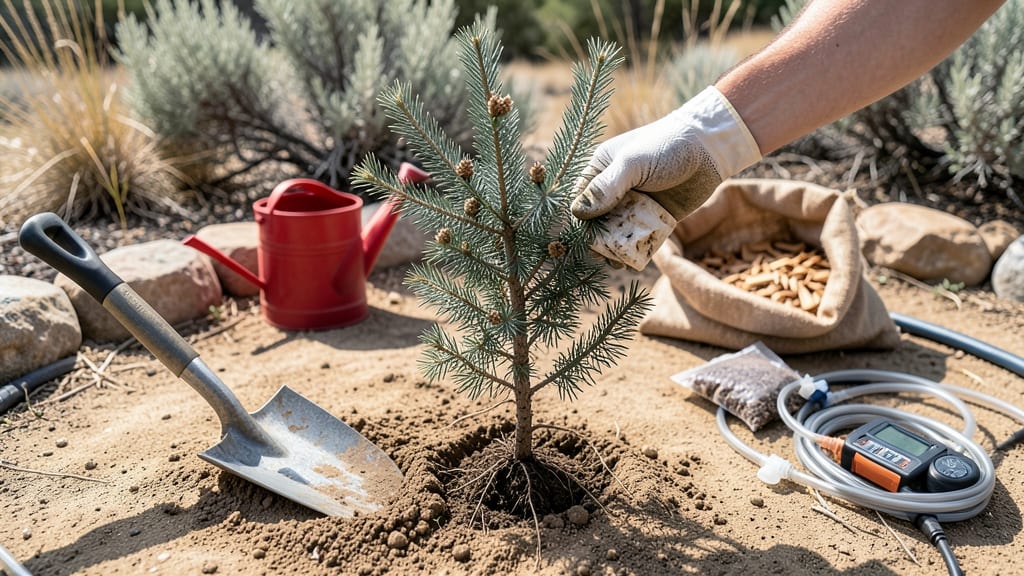
If you’ve ever wondered when is the best time to plant the trees in Utah, the answer might be simpler than you think—when you planted it.
Utah’s shifting frost dates and microclimates turn standard planting advice on its head, and getting the timing wrong can mean the difference between a thriving tree and a sad investment.
With zones ranging from 5b in Northern Utah to 8a in St. George, there’s no one-size-fits-all answer. Salt Lake City’s last frost on April 15 doesn’t match St. George’s mild winters, and mountain valleys have their own rules.
I’ll break down the best months for your specific corner of the state—and why early spring or late fall might be the game-changer you’ve been missing.
You don’t have to guess whether your soil is warm enough or if your tree will survive the first freeze. This guide covers everything from soil prep to species-specific tips, so you can plant with confidence. Let’s get your 🌳 off to the right start—no second-guessing required.
Ready to stop overthinking and start planting? We’ll tackle Utah’s tricky climate together, so your tree grows strong from day one. No more wasted efforts—just proven timing for your region.
Utah’s ideal tree planting windows by microclimate Zone
Utah’s diverse climate zones demand a tailored approach to planting trees. The high desert (like St. George) has warmer winters and longer growing seasons, while mountain regions (e.g., Park City) face shorter frost-free periods and cooler soil temperatures.
Even urban areas like Salt Lake City have unique microclimates influenced by elevation and urban heat islands.
For optimal root establishment, focus on early spring (March-April) or fall (September-October). These windows align with soil moisture availability and temperature stability, reducing transplant shock.
In USDA Zone 7b (Southern Utah), you can plant as early as February, while Zone 5b (Northern Utah) may require waiting until late April.
Here’s how to match your location to the best planting window:
| Zone & Location | Ideal Planting Months | Soil Temp Threshold (°F) | Key Considerations |
|---|---|---|---|
| Southern Utah (St. George, Zone 7b-8a) | February–March, September–October | 50–60°F | Drought-prone; prioritize deep watering and mulch. |
| Central Utah (Salt Lake City, Zone 6b) | April–May, September | 55–65°F | Urban heat islands; choose heat-tolerant species. |
| Northern Utah (Ogden, Zone 5b-6a) | Late April–May, August–September | 60–70°F | Later frost risks; protect young trees with burlap wraps. |
| Mountain Regions (Park City, Zone 5a-6a) | May–June, August | 65–75°F | Short season; opt for fast-growing species like quaking aspen. |
In Southern Utah, where St. George’s climate resembles the Sonoran Desert, container-grown trees can be planted year-round (except winter), thanks to mild winters. However, bare-root trees still benefit from spring or fall planting to avoid heat stress.
For Northern Utah, where frost dates shift dramatically, wait until after the last frost (mid-May) for spring planting.
Fall planting in Utah works best from September to early October, allowing roots to establish before winter dormancy.
Avoid planting in late October or November, as soil temperatures drop below 40°F, stunting root growth. Evergreens like Colorado blue spruce handle fall planting better than deciduous trees, which may struggle with early frost.
Pro tip: Use a soil thermometer to check root zone temperatures. Aim for 50°F or warmer for spring planting and 60°F or warmer for fall. If temperatures are below 40°F, delay planting until conditions improve.
For urban gardeners, microclimates near buildings or pavement can create warmer soil earlier in spring. Monitor local weather patterns and adjust your timeline accordingly. Utah State University Extension offers free frost date maps to help refine your planting schedule.
Remember, tree species matter. Drought-resistant varieties like Utah juniper or desert willow thrive in Southern Utah’s heat, while Colorado blue spruce or quaking aspen are better suited for cooler mountain regions. Always match your tree choice to your microclimate for the best results.
Critical factors that determine Utah’s tree planting success
Timing isn’t the only factor for successful tree planting in Utah—soil moisture, elevation, and tree type all play pivotal roles. Soil temperature must reach at least 50°F (10°C) for roots to establish, but Utah’s high desert soils dry out fast.
In St. George’s Zone 8a, you can plant earlier (February-March), while Northern Utah’s Zone 5b waits until after the May 1 last frost.
Elevation adds another layer: Mountain valleys (6,000–8,000 ft) have cooler soils, delaying planting by 2–4 weeks compared to lower elevations. Container-grown trees adapt better to off-season planting than bare-root varieties, which need moist soil to avoid transplant shock.
🌱Key takeaway:
3 Critical Factors for Utah Tree Planting
- Soil temp: Wait for 50°F+ (use a soil thermometer)
- Elevation: Higher = later planting (add 2–4 weeks)
- Tree type: Bare-root needs moisture; container-grown is flexible
Frost dates are just the start. Moisture availability is critical: Utah’s summer droughts mean newly planted trees need deep, infrequent watering (10–15 gallons per tree weekly). Mulching with 3–4 inches of wood chips locks in moisture and regulates soil temperature—essential for high desert conditions.
Don’t overlook wind exposure, either. Open areas dry out faster, while sheltered spots retain moisture longer. If planting in exposed locations, choose wind-resistant species like Utah juniper or quaking aspen, and stake young trees to prevent root damage.
For container-grown trees, timing is more flexible—you can plant almost year-round (except winter), but early spring or fall still gives roots 6–8 weeks to establish before extreme heat or cold. Bare-root trees, however, demand moist soil and cooler temperatures, making fall planting ideal in most of Utah.
Pro tip: Check Utah State University Extension’s frost maps for your exact location—even a 10-mile elevation change can shift planting windows by 2–3 weeks.
With these factors in mind, you’ll avoid the #1 mistake: planting too early when soils are still cold or too late when roots can’t establish before winter.
🌿 Now that you’ve got the science down, let’s match your tree species to Utah’s planting seasons for maximum success.