
Plants
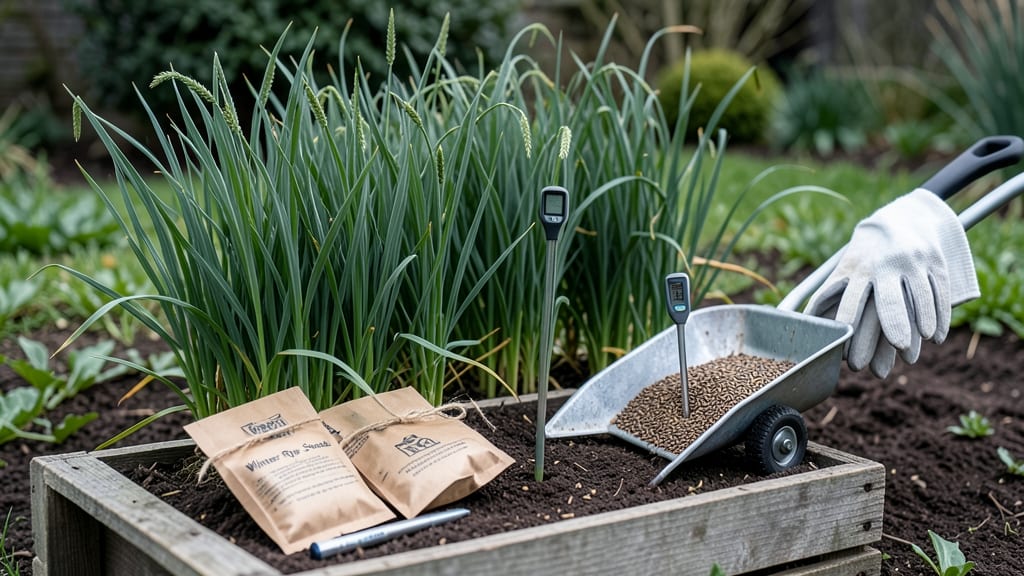
If you're a Texas gardener looking to boost your soil health and control erosion, knowing when to plant winter rye in Texas is the key to success. This hardy cover crop thrives in our warm winters but needs precise timing to establish strong roots before the first frost hits.
The perfect window for planting 🌾 winter rye in Texas falls between late August and early October, giving it time to grow before winter sets in. North Texas (like Dallas) has a shorter window than South Texas (like Houston), where milder winters allow for slightly later plantings.
Why does timing matter so much? Plant too early, and summer heat will stress young seedlings. Too late, and frost may kill it before it can take hold. I'll show you exactly how to adjust your planting schedule based on your region's frost dates and soil conditions.
Once established, winter rye works overtime to protect your soil, suppress weeds, and prepare your garden beds for spring planting. Let's dive into the frost-date guide that will help you make the most of this powerful cover crop in your Texas garden.
Texas winter rye planting dates by region (frost-date breakdown)
Texas’ vast geography means North Texas and South Texas have wildly different frost dates—critical for winter rye success. In North Texas (Dallas/Fort Worth), first frosts arrive as early as November 15, while South Texas (San Antonio/Houston) often waits until December 15 or later.
Planting too early risks summer bolting, while late plantings may not establish before winter. Let’s break down the optimal planting windows by region, including soil temperature thresholds and last-safe-planting dates.
For North Texas, aim to plant winter rye between mid-August and early October. This window ensures seedlings establish before soil temperatures drop below 50°F, which slows germination. In South Texas, you’ve got a slightly longer window—late August through mid-October—thanks to milder winters.
However, don’t push it past October 15, or seedlings may struggle to root before first frosts hit.
Soil temperature is your best friend for timing. Winter rye germinates best in soils between 50°F and 75°F. Use a soil thermometer to check—if temps dip below 50°F at planting, germination slows dramatically.
In North Texas, soil temps often drop below this threshold by late October, while South Texas can hold onto warmer soils until November.
Last-safe-planting dates vary by region too. In North Texas, shoot for October 1 as your cutoff—any later, and seedlings may not survive first frosts in November. In South Texas, you can stretch it to October 15, but monitor weekly frost forecasts closely. If a hard freeze is predicted, plant sooner rather than risking seedling death.
Here’s the frost-date comparison you need to plan like a pro:
Pro tip: Use the Texas A&M AgriLife Extension frost date maps to double-check your local area. For example, Lubbock in West Texas has earlier frosts (October 31) than Corpus Christi (January 15), so adjust your planting window accordingly.
If you’re in a transition zone (like College Station or Waco), err on the earlier side—better to plant too soon than too late.
Summer heat stress is another silent killer of winter rye seedlings. If you plant in late August or September and hit a 100°F+ heatwave, germination slows to a crawl.
To mitigate this, plant in the early morning or late afternoon, keep soil consistently moist, and consider a light shade cloth (30% shade) if temps soar above 95°F for more than 3 days.
Once planted, winter rye thrives in Texas’ mild winters, providing weed suppression and soil protection until spring. In North Texas, it may die back under hard freezes but regrows when temps warm.
In South Texas, it often stays green year-round, making it a dual-purpose cover crop and forage option. Just remember: earlier planting = better establishment, but don’t sacrifice seedling health for a few extra days in the ground.
For gardeners in USDA Zones 8a–9a, aim to have winter rye 4–6 inches tall before first frost. This ensures it’s rooted deeply and can withstand winter stresses.
If you’re in Zone 10b (like Brownsville), you can plant as late as November 1, but monitor for unseasonal cold snaps—they can still stress young seedlings.
🌾
Texas winter rye planting dates by region (frost-date breakdown)
Texas' diverse climate means planting winter rye in North Texas (like Dallas) requires a different approach than in South Texas (like Houston). The key factor? First frost dates—which vary by 1-2 months across the state.
In North Texas, you'll want to plant by mid-October, while South Texas gardeners can push it until early November.
Winter rye needs 4-6 weeks to establish strong roots before winter sets in. This means calculating your last frost date and planting 6 weeks prior to ensure success. For example, if your first frost is December 15, aim to plant by November 1.
Here’s how to break it down by region:
Soil temperature is just as critical as frost dates. Winter rye germinates best when soil temps are between 60-80°F (15-27°C). In North Texas, soil cools quickly by mid-October, so don’t wait too long. Meanwhile, South Texas can keep planting into November thanks to warmer soils.
Pro tip: Use a soil thermometer to check temps before planting. If your soil is below 60°F (15°C), wait a few days—cold soil slows germination and weakens seedlings. Planting too late risks frost damage before roots establish, leaving your cover crop vulnerable to winter die-off.
Once you’ve nailed your planting window, focus on soil prep. Winter rye thrives in loose, well-draining soil with a pH of 5.5-7.5. Work in compost or aged manure a few weeks before planting to give seedlings a nutrient boost.
Mulch lightly after planting to retain moisture and protect young plants from late-summer heat stress.
With the right timing and soil prep, your winter rye will establish quickly, providing year-round soil protection and setting your garden up for a bountiful spring. 🌾