
How To
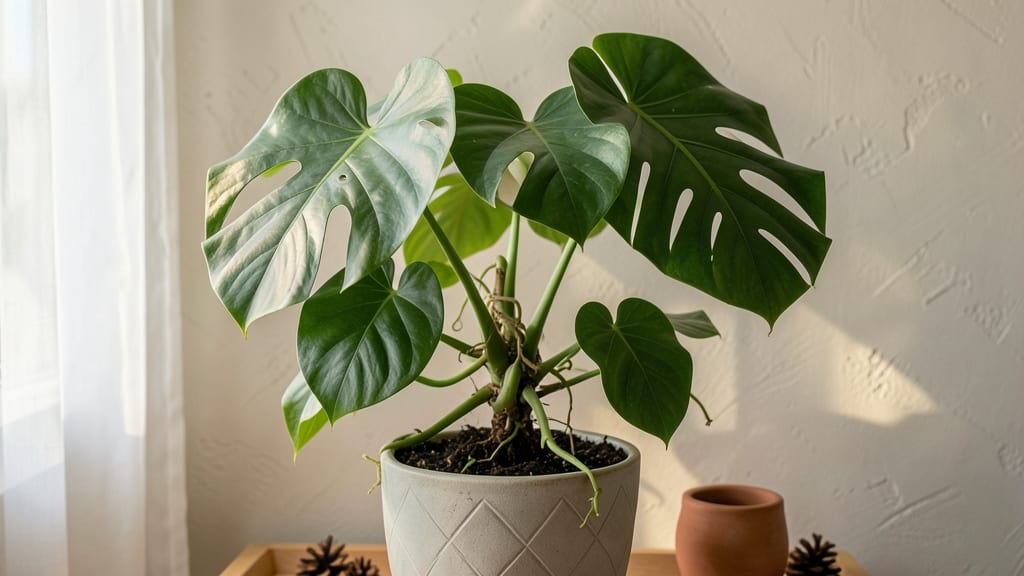
Ideal daily light requirements for Monsteras by room type
Monsteras thrive in bright indirect light, but their needs vary depending on your home’s layout. A north-facing window provides gentle, consistent light, while east-facing windows offer morning sun without harsh afternoon rays. South-facing windows can work too—just keep your monstera 3-5 feet away to avoid scorching leaves.
If you’re in a west-facing room, afternoon sun can be intense. Use sheer curtains to diffuse light or rotate your plant every few weeks for even growth. Bathrooms with small windows? No problem—just supplement with grow lights for 6-8 hours daily to mimic natural conditions.
Here’s how to measure light exposure at home: Hold a white piece of paper near your plant. If you can barely read text through it, the light is ideal. If it’s too dark to see your hand, your monstera needs more light.
For accuracy, use a light meter app (like Light Meter by Acuity) to track 10,000-20,000 lux—the sweet spot for Monsteras.
| Room Type | Light Needs | Ideal Window | Distance from Window |
|---|---|---|---|
| Living Room | Bright indirect (4-6+ hours) | East or North | 2-3 feet |
| Office | Moderate indirect (3-4 hours) | North or West (filtered) | 3-5 feet |
| Bathroom | Low to bright indirect (supplement with grow lights) | Any (artificial light needed) | N/A (use grow lights) |
| Bedroom | Low light (2-3 hours indirect) | North-facing or artificial | 4-6 feet |
Pro tip: Rotate your monstera quarter-turn every 2 weeks to ensure even growth. Plants lean toward light sources, so if you notice one side stretching, it’s begging for a better spot. For variegated Monsteras (like ‘Albo’), aim for slightly more light—they need extra energy to maintain their stunning patterns.
In summer, watch for sunburn signs (brown patches on leaves) if your monstera gets afternoon sun. Move it back 6 inches or add a light sheer curtain to protect it. Conversely, in winter, reduce watering slightly since lower light means slower growth and less moisture evaporation.
If your home lacks natural light, grow lights are a game-changer. LED panels with a cool white (5000K-6500K) spectrum work best. Place them 12-18 inches above the plant and run them for 12-14 hours daily to mimic a full daylight cycle. Avoid cheap bulbs—they can overheat and damage leaves.
For large Monsteras (over 5 feet tall), prioritize vertical space near windows. Use wall-mounted planters or hanging baskets to maximize light exposure without taking up floor space. Smaller varieties (like ‘Monstera Adansonii’) adapt better to lower light but still need 2-3 hours of indirect light daily to thrive.
🌿
Signs your monstera is getting too much or too little light
Your monstera’s leaves tell a story—yellowing edges scream for more light, while brown crispy patches mean it’s sunburned. I’ve seen both extremes, and the good news?
Adjusting light exposure can turn those sad leaves into lush, vibrant growth in just weeks. Let’s decode your plant’s signals before they become permanent damage.
First, check for slow growth or small leaves. These are classic signs your monstera isn’t getting enough light to photosynthesize properly. Even in low-light spots, you’ll notice new leaves staying under 4 inches wide—a red flag for underlighting.
Compare it to mature leaves; if the contrast is dramatic, it’s time to move it closer to a window.
On the flip side, white or yellow patches on leaves exposed to direct sun are sunburn in disguise. These spots start as pale areas and quickly turn crispy if ignored. Worse, the leaf tissue will die and fall off, leaving ugly holes.
If you spot these, relocate your monstera immediately—even a few hours of direct sun can cause permanent scarring.
🌿 Seasonal shifts complicate things. In winter, your monstera might thrive in a south-facing window that’s too harsh in summer. I rotate mine quarter-turns every 2 weeks to balance light exposure evenly. This prevents one side from getting over-exposure while the other languishes.
Too Much Light vs. Too Little
- 🔥 Brown crispy patches
- 🔥 White/yellow sunburn marks
- 🔥 Leaf edges curling upward
- 🔥 Stunted new growth
- 🌱 Pale, light green leaves
- 🌱 Small, slow-growing new leaves
- 🌱 Leggy, stretched stems
- 🌱 Leaves dropping prematurely
Pro tip: Test your light spots with a simple trick. Place a white piece of paper near your monstera’s leaves for a few hours. If the paper shows sharp shadows, it’s direct sun—move your plant. If the light is soft and diffused, it’s perfect for your monstera.
Don’t panic if you’ve missed the signs—adjusting light exposure fast can save your plant. Rotate it quarter-turns weekly to even out growth, and watch how it responds in 2-4 weeks. Your monstera’s recovery starts with listening to its leaves—literally.