
Plants
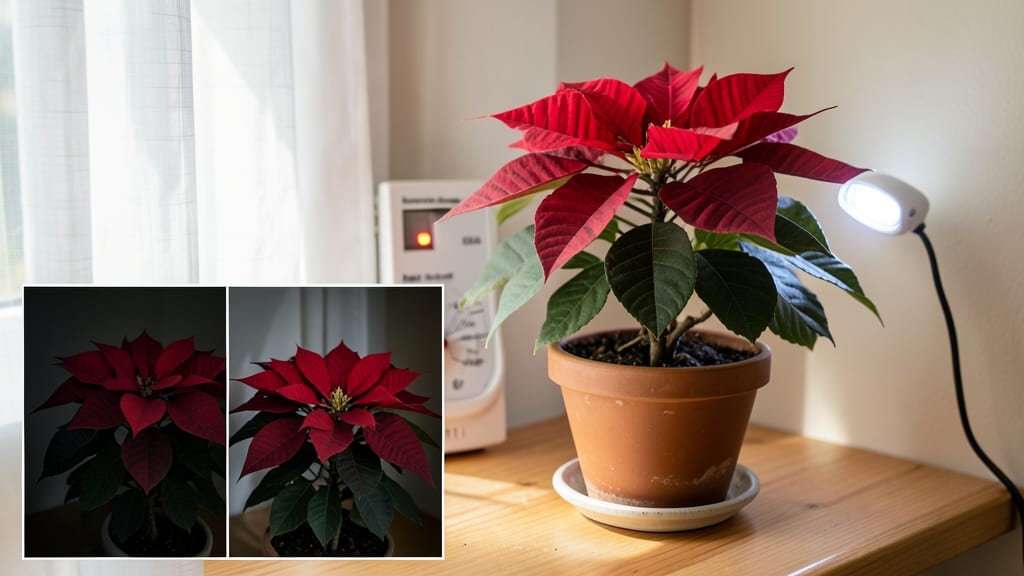
If your 🎄 poinsettia plant looks more sad than festive, you might be getting how much light does a poinsettia plant need all wrong.
These vibrant holiday plants thrive on bright indirect sunlight, but too much direct sun or dim corners can turn their leaves yellow or stretch their stems into leggy shadows.
Most people assume poinsettias need plenty of sun, but the truth is they prefer 6-8 hours of gentle, filtered light daily—think east or west-facing windows rather than harsh southern exposure. In winter, when days grow short, you’ll need to supplement with grow lights to keep them happy and blooming.
I’ve seen firsthand how light mistakes can ruin even the most well-cared-for poinsettias—leaving you with droopy leaves or faded colors just when you want them to shine. The good news? With the right setup, you can coax out those rich reds, pinks, and whites all season long.
Let’s break down exactly how to give your poinsettia the perfect light balance, whether you’re dealing with a sunroom, a north-facing apartment, or even artificial lighting. Your holiday centerpiece will thank you!
 Best Window Placement
Optimal light requirements for poinsettia growth and blooming
Poinsettias thrive under bright indirect sunlight, which is their ideal light condition for vibrant blooms and lush foliage. These plants need about 6-8 hours of light daily, but direct sun can scorch their leaves and fade their signature colors.
Understanding the balance between light intensity and duration is key to keeping your poinsettia healthy and show-stopping.
During the growing season (spring to summer), poinsettias benefit from morning sun exposure paired with afternoon shade. This mimics their natural tropical habitat, where they grow under dappled sunlight.
In contrast, the fall blooming cycle requires shorter daylight hours—around 10 hours of darkness per day—to trigger their iconic color change from green to red, pink, or white.
Here’s how light affects poinsettias at different stages: insufficient light leads to leggy stems and pale leaves, while too much direct sun causes brown leaf tips and crispy edges. The goal? Bright, diffused light that keeps their foliage rich and their bracts (those showy "flowers") vivid.
| Light Condition | Daily Duration | Effect on Poinsettia | Best For |
|---|---|---|---|
| Bright Indirect Light | 6-8 hours | Vibrant bracts, healthy growth | Growing season, blooming |
| Low Light | <4 hours | Leggy stems, pale leaves | Avoid entirely |
| Direct Sunlight | >2 hours | Brown leaf tips, faded bracts | Never ideal |
| Artificial Grow Lights | 12-14 hours | Consistent growth, color retention | North-facing rooms, winter |
Seasonal adjustments are crucial. In summer, poinsettias may need afternoon shade to prevent heat stress, while in winter, supplementing with grow lights can help maintain their color if natural light is scarce.
For example, a south-facing window might work in winter, but in summer, even indirect light can become too intense—so rotate your plant or use a sheer curtain.
If you’re growing poinsettias outdoors in USDA Zone 6a, they thrive in partial shade gardens during summer but must be brought indoors before the first frost (around October 15) to protect them from cold.
Their natural habitat in Mexico’s highlands gives them clues about their light preferences: bright but filtered sunlight.
Pro tip: Place your poinsettia 2-3 feet from an east or west window for the perfect balance. East-facing windows provide gentle morning light, while west-facing windows offer afternoon brightness without the harsh midday rays. Avoid south-facing windows unless you’re using a sheer curtain to diffuse the light.
For indoor growers, LED grow lights (12-14 hours daily) are a game-changer, especially in north-facing rooms or basements. Look for lights with a red and blue spectrum to mimic natural sunlight and encourage blooming. Position the light 6-12 inches above the plant and adjust as it grows.
Remember, poinsettias are short-day plants, meaning they need 12+ hours of darkness to trigger blooming. During fall, avoid leaving lights on near them after sunset to ensure they enter their blooming cycle on schedule.
By mastering these light conditions, you’ll transform your poinsettia from a struggling houseplant to a showcase centerpiece that steals the show every holiday season. 🎄
How to adjust light for poinsettias in different rooms
Not all rooms are created equal when it comes to poinsettia light needs. A south-facing window might feel perfect, but it could actually scorch your plant with too much direct sun.
Meanwhile, a north-facing room might leave your poinsettia stretching toward the light like a sleepy cat. Let’s break down how to optimize light in every common indoor space.
For east or west-facing windows, your poinsettia will thrive with 6-8 hours of bright indirect sunlight. These windows provide gentle morning or afternoon light without the harsh midday rays. Place your plant 2-3 feet away to filter the light naturally through sheer curtains if needed.
If you’re working with a south-facing window, you’ll need to block direct sunlight during peak hours (10 AM–4 PM). Use sheer or white curtains to diffuse the light, or position your plant 6+ feet back from the window. Without this adjustment, you’ll risk leaf burn and faded bracts.
North-facing rooms are trickier because they offer low natural light. If your poinsettia starts looking leggy or pale, it’s time to supplement with grow lights. A 12-hour LED grow light placed 12–18 inches away will mimic daylight and keep your plant healthy until spring.
🪴 Room-by-Room Light Solutions
- 🌞 South Window: Use sheer curtains or move plant 6+ feet back to avoid leaf burn.
- 🌿 East/West Window: Place 2-3 feet from glass for bright indirect light.
- 🌧️ North Window: Supplement with LED grow lights for 12 hours daily if natural light is insufficient.
- 🏠 Interior Rooms: Rotate plant quarter-turn daily to prevent uneven growth from one-sided light.
Even in well-lit rooms, uneven light exposure can cause your poinsettia to grow lopsided. I recommend rotating the pot ¼ turn every 2-3 days to ensure all sides get equal light. This simple habit keeps your plant compact and symmetrical, so it looks as stunning as it feels.
For artificial lighting, opt for full-spectrum LED grow lights (6400K–6600K color temperature) to mimic natural daylight. Hang them 12–18 inches above the plant and keep them on for 12–14 hours daily. Avoid incandescent bulbs—they emit too much heat and can damage delicate leaves.
Pro tip: If you’re using a grow light, place a thermometer nearby to monitor temperatures. Poinsettias prefer 65–75°F and can get stressed if lights overheat the room. Adjust the height or duration if leaves start curling or wilting.