
Plants
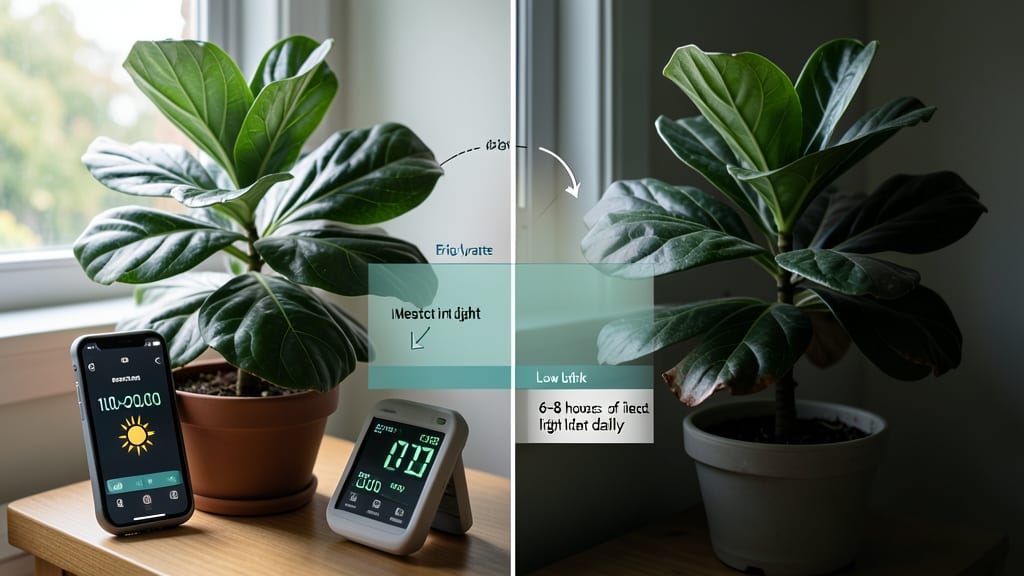
If your 🌿 ficus plant looks like it’s fighting for its life—droopy leaves, sparse growth, or yellowing—chances are, how much light does a ficus plant need is the key question.
The right balance of bright indirect sunlight can turn that struggling plant into a thriving statement piece, but too much direct sun will fry its leaves faster than you can say "leaf burn."
Most ficus varieties, like the popular Ficus elastica or Ficus benjamina, thrive in spots where sunlight is gentle but abundant—think east-facing windows or a few feet back from a south-facing one.
Too little light? Your plant will stretch toward the nearest glow like a sunflower, growing leggy and weak. Too much? Watch for crispy brown edges that scream, "I’m overheating!"
Here’s the good news: with a few simple tweaks—like rotating your plant for even growth or swapping harsh overhead bulbs for soft grow lights—you can create the perfect light haven for your ficus.
I’ll walk you through exactly how to spot the signs of light trouble and fix them before your plant throws in the towel.
Whether you’re dealing with a tiny apartment or a bright sunroom, we’ll cover the best spots to place your ficus so it gets just the right amount of glow—no guesswork, no guesswork. Let’s get your plant back to its lush, leafy best!
 Best Window Placement
Ideal light requirements for ficus plants: bright indirect sunlight explained
Ficus plants thrive under bright indirect sunlight, making them perfect for homes with limited direct sun exposure. Unlike sun-loving plants, ficus varieties like Ficus elastica (rubber plant) and Ficus benjamina (weeping fig) can't handle harsh midday rays, which cause leaf burn or yellowing.
Think of it as a gentle morning glow—similar to what you'd find near an east-facing window or under sheer curtains.
The key is filtered light for 4-6 hours daily. This mimics their natural tropical habitat, where sunlight is diffused through tree canopies. Too little light leads to leggy growth and weak stems, while too much causes crispy brown edges.
Balancing this is easier than you think—just observe your plant's leaves for clues!
| Light Condition | Ficus Response | Ideal Solution |
|---|---|---|
| Low Light (<2 hours/day) | Leggy stems, sparse leaves, yellowing | Move to bright indirect light or use grow lights 12-14 hrs/day |
| Bright Indirect (4-6 hrs/day) | Vibrant green leaves, compact growth, glossy foliage | Perfect! Rotate plant weekly for even growth |
| Direct Sun (>3 hrs/day) | Brown crispy edges, bleached leaves, leaf drop | Add sheer curtain or move 3-5 ft away from window |
| Artificial Grow Lights | Healthy growth, no leaf scorch, consistent color | Use LED grow bulbs 6-12 inches above plant for 12 hrs/day |
Seasonal adjustments are crucial. During summer months, when sunlight is intense, place your ficus 5-6 feet from a south-facing window or use a light sheer curtain to filter UV rays.
In winter, when natural light dims, supplement with a 15W LED grow bulb placed 12 inches above the plant for 12 hours daily.
Window placement matters! North-facing windows provide the gentlest light, ideal for ficus plants. East-facing windows offer morning sun, perfect for varieties like Ficus lyrata (fiddle-leaf fig).
Avoid west-facing windows unless you use a sheer curtain—afternoon sun is too harsh. For offices or rooms without windows, full-spectrum LED grow lights are a game-changer.
Pro tip: Rotate your ficus every 2-3 weeks to ensure even light exposure. Plants lean toward their light source, creating uneven growth. A simple quarter-turn keeps your ficus symmetrical and encourages balanced foliage development. This is especially important for Ficus benjamina, which can become lopsided without rotation.
If you notice new leaves growing smaller than older ones, it’s a red flag for insufficient light. Conversely, sudden leaf drop or crispy edges means you’ve overdone it. Ficus plants communicate their needs through their leaves—learn to read these signals, and you’ll master their lighting preferences in no time!
For outdoor ficus plants, like Ficus microcarpa (Ginseng fig), provide partial shade during peak sun hours (11 AM–3 PM). These varieties can handle morning sun but need afternoon shade to prevent stress. Use a 50% shade cloth if growing in containers outside during summer.
Remember, every ficus variety has slight differences. Ficus elastica tolerates slightly lower light than Ficus benjamina, which is more demanding. When in doubt, start with moderate indirect light and adjust based on your plant’s response.
With the right lighting, your ficus will reward you with glossy, vibrant leaves for years to come!
Ideal light requirements for ficus plants: bright indirect sunlight explained
Ficus plants thrive in bright indirect sunlight, which means they need plenty of light but without the harsh rays that cause leaf burn. Think of it like a sunbathing session—your ficus wants to soak up the glow but with a light sheen of sunscreen.
Most varieties, like the Ficus elastica (rubber plant) or Ficus benjamina (weeping fig), do best with 2-4 hours of filtered light daily, especially in the morning or late afternoon when the sun is less intense.
If you’re placing your ficus near a window, aim for a spot 3-6 feet away from an east- or north-facing window. South-facing windows can work too, but your plant will need a sheer curtain to diffuse the light.
Avoid placing it directly in front of a west-facing window, as the afternoon sun can be too harsh and lead to brown leaf tips or crispy edges.
🌿
| Light Condition | Ficus Variety Needs | Best Window Placement |
|---|---|---|
| Bright Indirect Light | Ficus elastica, Ficus benjamina | 3-6 ft from east/north window |
| Low Light Tolerance | Ficus lyrata (fiddle-leaf) | 6-10 ft from window or under grow lights |
| Direct Sun Risk | All ficus varieties | Avoid south/west windows without sheer curtains |
Seasonal adjustments are key! During summer months, your ficus might need to be moved further from the window to prevent overheating, while in winter, it can handle a spot closer to the glass to maximize limited sunlight.
If you notice stretched or pale leaves, it’s a sign your plant is craving more light. Rotate the pot quarter-turns every 2 weeks to ensure even growth and prevent lopsided development.
For indoor growers with limited natural light, LED grow lights are a game-changer. A 12-15 hour photoperiod (light exposure) with a soft white or full-spectrum bulb can mimic ideal conditions.
Place the light 6-12 inches above the plant and adjust the height as your ficus grows to avoid leaf burn or stunted growth.
Pro tip: If your home has fluorescent lighting, position your ficus within 2-3 feet of the bulbs for 6-8 hours daily. Fluorescent lights provide a gentle, consistent light source that works well for ficus plants struggling in dim corners.
Just avoid cool white bulbs, which can stress your plant—stick to warm white or daylight spectrum instead.
Remember, every ficus variety has slight differences, but bright indirect light is the golden rule. With the right setup, your plant will reward you with glossy leaves, vigorous growth, and a healthy, happy appearance that’s the envy of every plant lover. 🪴