
Plants
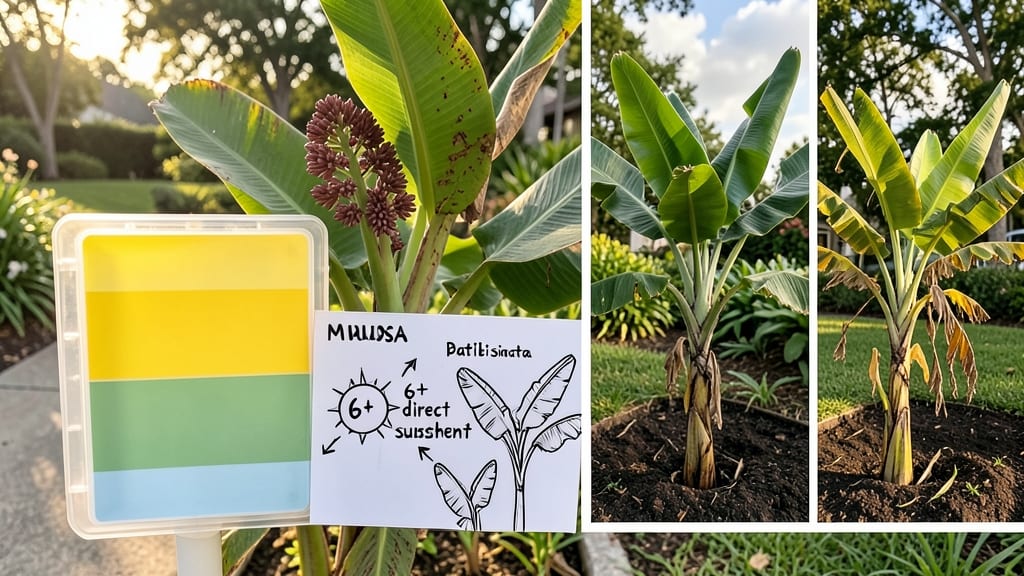
If you’ve ever wondered why your 🍌 banana plant looks sad despite your best care, the answer might be hiding in plain sight—how much light does it really need? Too little sunlight and your plant will stretch and weaken; too much, and you’ll end up with crispy, sunburned leaves.
The key lies in understanding the balance between bright, indirect light and the occasional burst of direct rays.
Banana plants in their natural tropical homes thrive under 6-8 hours of sunlight daily, but they’re not as forgiving as you might think. In cooler zones like USDA 10-12, they can bask in full sun, while houseplants need bright indirect light near east or west-facing windows.
The trick? Mimicking their native dappled shade by shielding them from harsh afternoon rays in hot climates.
What’s most surprising is how varieties differ—some dwarf bananas tolerate lower light better, while others demand full sun to produce fruit.
I’ll show you how to spot the signs of light stress, from yellowing leaves to weak stems, and how to adjust your setup whether you’re growing in a pot or a tropical garden. Let’s get your banana plant the perfect glow it craves.
Ready to transform your 🍌 banana plant from struggling to thriving? By the end of this guide, you’ll know exactly where to place it—indoors or out—to keep it happy, healthy, and ready to reward you with those sweet, homegrown bananas. No guesswork, just growth!
 Best Window Placement
Ideal sunlight hours for banana plants: full sun vs. partial shade explained
Banana plants love sunlight, but they’re not as tough as you might think—too much direct sun can scorch their leaves, while too little slows growth and reduces fruit production.
As a tropical plant, they thrive with 6 to 8 hours of sunlight daily, but the type of light matters just as much as the duration. In hot climates, afternoon shade is a must to prevent sunburn, while cooler zones can handle more direct exposure.
Most banana varieties, like the popular Cavendish or Lady Finger types, prefer bright indirect light with morning sun and afternoon shade. If you're growing in containers, place them near east or west-facing windows to avoid intense midday rays.
For in-ground plants, a spot under dappled shade from trees works perfectly in tropical regions.
Here’s how different banana varieties handle light—some are more flexible than others:
| Variety | Sunlight Needs | Best For | Notes |
|---|---|---|---|
| Cavendish | 6-8 hours (partial shade in hot zones) | Containers, tropical gardens | Most common; needs afternoon shade in deserts |
| Lady Finger (Dwarf) | 4-6 hours (bright indirect light) | Indoor pots, small gardens | Tolerates lower light but fruits slower |
| Plantains | 8+ hours (full sun with afternoon shade) | Tropical climates, large gardens | Needs more sun for starchy fruit development |
| Red Dacca | 6-7 hours (partial shade) | Ornamental, containers | Tolerates indoor conditions better than fruiting types |
If you're growing banana plants in containers, rotate the pot every few weeks to ensure even light exposure. This prevents the plant from leaning toward the sun, which can weaken its structure.
For indoor growing, a south-facing window with a sheer curtain filters harsh light while still providing enough brightness. Avoid north-facing windows—they offer the least light intensity.
In temperate zones, banana plants can handle more direct sun, especially in spring and fall when temperatures are milder. However, even in cooler climates, avoid placing them in full afternoon sun during summer months, as the combination of heat and UV rays can cause irreversible damage to the leaves.
For greenhouse growing, aim for 50-60% shade cloth during peak sunlight hours (11 AM–3 PM) to mimic natural tropical conditions. This reduces heat stress while still providing the 6-8 hours of light they crave. Pair this with good air circulation to prevent humidity-related issues like fungal infections.
One common mistake I see is assuming all banana plants need full sun. While they love light, intensity matters more than duration in hot climates. For example, a Lady Finger banana in a Florida patio might thrive with just 4 hours of morning sun if protected from the afternoon heat.
Test your plant’s tolerance by observing leaf color—dark green leaves mean it’s happy, while yellowing or brown edges signal light stress.
Pro tip: Use a light meter (or your phone’s light app) to measure intensity. Banana plants thrive at 10,000–20,000 lux—any lower, and growth slows significantly.
If your indoor space falls short, supplement with a grow light (LED or fluorescent) for 12–14 hours daily during winter months when natural light is scarce.
Remember, banana plants are not trees—they’re giant herbs with delicate leaves. Treat them like you would a tropical houseplant in terms of light, and you’ll reward yourself with lush foliage and (if you’re lucky) sweet, homegrown bananas. 🍌
Signs your banana plant isn’t getting enough (or too much) light
Banana plants are masters of subtlety—they’ll silently suffer before showing obvious signs of light stress. That’s why I always check for these three key symptoms first: yellowing leaves, weak stems, or stunted growth.
If your 🍌 banana plant is stretching toward the light like a sunflower, it’s begging for more brightness. This "leggy" growth happens when plants search for light, weakening their structure and reducing fruit potential.
On the flip side, too much direct sun—especially harsh afternoon rays—can cause sunburn. Look for brown patches on leaves or crispy edges along the leaf margins.
These are classic signs your plant is getting more sun than it can handle, particularly in hot climates like USDA Zone 10+. Even in cooler zones, south-facing windows can deliver too much intensity without a sheer curtain to diffuse the light.
🚨 Here’s the tricky part: Symptoms overlap with other issues like overwatering or nutrient deficiency. That’s why I always pair light checks with a soil moisture test and leaf inspection.
For example, yellowing between leaf veins (not just the edges) often signals overwatering, while purple stems might mean phosphorus deficiency. Light stress usually starts with pale, thin leaves or leaves curling inward to protect themselves.
🌱 Not Enough Light?
- ✅ Pale, thin leaves (etiolation)
- ✅ Leggy stems (stretching toward light)
- ✅ Slow growth (fewer new leaves)
- ✅ No flowering (critical for fruit)
☀️ Too Much Light?
- ❌ Brown patches (sunburn)
- ❌ Crispy leaf edges (drying out)
- ❌ Curling leaves (heat stress)
- ❌ Wilting midday (overheating)
If you spot these signs, act fast! Move your plant to a brighter spot (like a south-facing window with a sheer curtain) or add artificial grow lights for 12-14 hours daily. For sunburned leaves, trim the damaged parts to redirect energy to healthy growth.
And remember: dwarf varieties like Lady Finger bananas tolerate lower light better than standard types, so choose your variety wisely if space is limited.
Pro tip: Rotate your pot every few days to ensure even light exposure. Banana plants grow toward the light source, so uneven growth is a dead giveaway for inconsistent lighting.
With the right balance, your plant will reward you with bold, green leaves and—eventually—those sweet, homegrown bananas you’re dreaming of. 🌿
Still unsure? Grab a light meter (they’re cheap!) to measure exactly how much light your plant is getting. Aim for 6-8 hours of bright, indirect light—that’s the golden rule for happy banana plants. 🌞